
- Originally Published: August 19, 2024
- 5 Comments
- Edwena Kennedy, RD, BSc. Neuroscience
- Updated: July 20, 2026
Balancing breast milk or formula feedings with solid foods and sleep can be hard to juggle because there are only 24 hours in a day, and ideally, we want to fit everything in during daytime hours. It’s also critical that they’re all spaced apart nicely.
That’s why we created sample feeding schedules for babies 6-12 months old so you can follow them and adapt them to your baby’s unique needs. These schedules account for all the changes they’ll go through during this time, like dropping milk feedings and naps, and adding in more solid food meals.
Plus, we’ll show you how you can customize it to match your baby’s existing schedule, how to know they’re ready for more solids, and even give you tips for when they enter toddlerhood at 12 months old.
If you’re getting ready to start solids with your little one, you’re likely wondering how solid foods will impact your baby’s milk feeds. Don’t worry – you won’t be fully weaning yet, it’s more of a gradual process! But it can be a tricky transition and that’s why we created our breast and bottle weaning guide so you can feel prepared to enter this next stage of babyhood!
Table of Contents
If you prefer to listen while you multitask, check out our podcast episode below!
What is a recommended starting solids feeding schedule for infants?
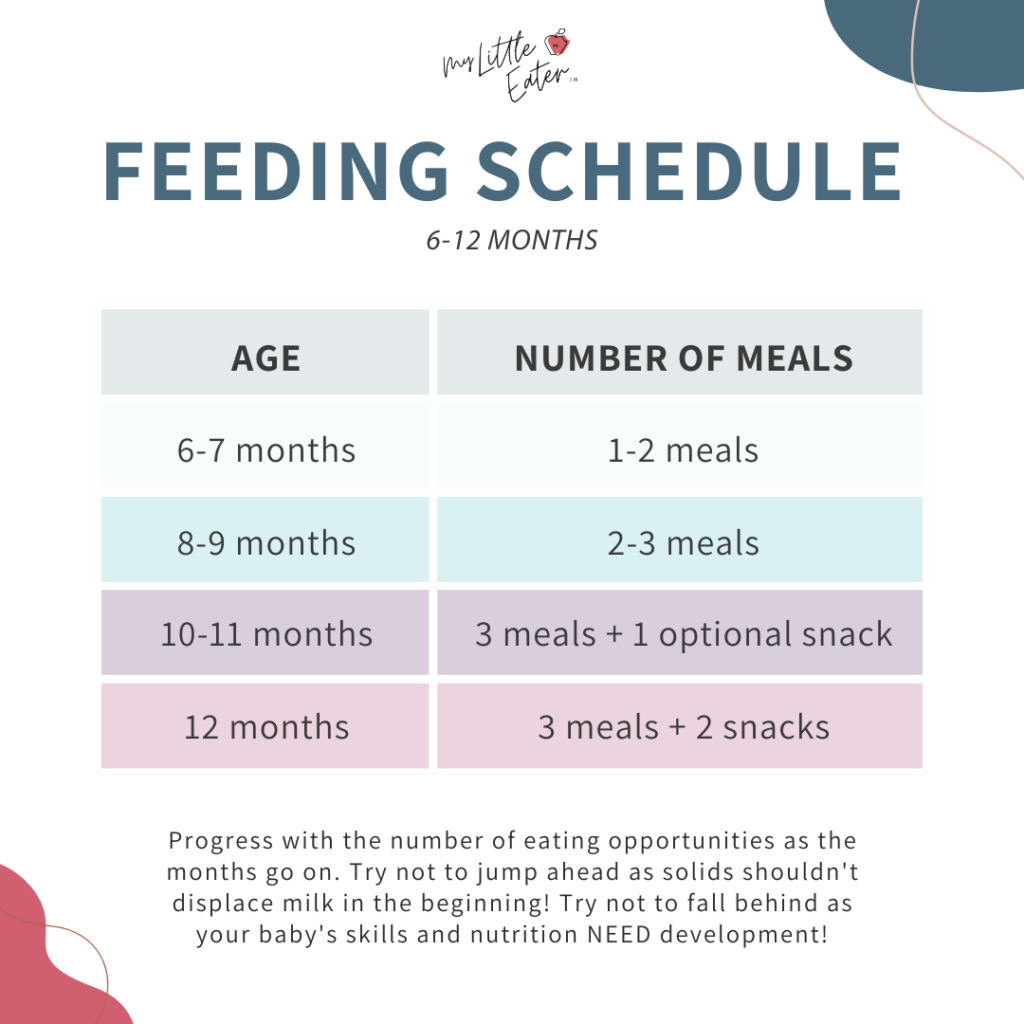
When starting solids at around 6 months old, most babies only need 1 – maybe 2 – meals a day. Your baby will continue to add more meals and snacks as they get older, coinciding with a drop in milk feeds. Our goal is to have your baby eating 3 solid meals per day by 9 months old. At 6 months, breast milk or Infant Formula is still your baby’s primary source of nutrition, and they should usually be taking about 28 to 32 ounces of milk daily.
This is because we want to ensure they’re getting enough practice to develop their eating skills by 12 months old when food becomes their primary source of nutrition over milk.
Review the chart below to see how the number of meals changes with age, and grab our breast and bottle weaning guide for more guidance on how milk feeds will change over the months as well.
Sample feeding schedules from 6-12+ months
Your baby’s typical feeding schedule is dependent on their sleep schedule, how old they are, how often they nurse or take a bottle, and more.
Take a look at our sample feeding schedules below to guide you and help you get the basics down.
6-7 months feeding schedules
Before your baby starts solids, make sure they’re showing all developmental signs of readiness. This includes being able to sit upright with minimal support and hold their head steady.
#Milk feedings: 5-6
Total amount of milk: 28-32 oz.
Milk Feedings: About every 2.5 – 3.5 hours based on hunger cues
Solids: About 30 min – 1.5 hours after previous milk feeding
6:30 / 7:00 AM
7:30 / 8:30 AM
9:00 / 9:30 AM
10:00 / 10:30 AM
12:00 / 1:00 PM
1:00 / 1:30 PM
2:30 / 3:30 PM
5:00 / 5:30 PM
6:00 / 6:30 PM
7:30 / 8:00 PM
Wake & Milk Feed
BREAKFAST
Nap
MILK FEEDING
MILK FEEDING
NAP
MILK FEEDING
MILK FEEDING
SUPPER
Milk feed & Bed
#Milk feedings: 5-6
Total amount of milk: 28-32 oz.
Milk Feedings: About every 2.5 – 3.5 hours based on hunger cues
Solids: About 30 min – 1.5 hours after previous milk feeding
6:30 / 7:00 AM
7:30 / 8:30 AM
9:00 / 9:30 AM
10:00 / 10:30 AM
12:00 / 1:00 PM
1:00 / 1:30 PM
2:30 / 3:30 PM
5:00 / 5:30 PM
6:00 / 6:30 PM
7:30 / 8:00 PM
Wake & Milk feeding
BREAKFAST
Nap
MILK FEEDING
MILK FEEDING
NAP
MILK FEEDING
MILK FEEDING
SUPPER
Milk feeding & BEDTIME
8-9 months feeding schedules
As babies eat more confidently at this stage, introduce expanding food textures (Phase 3 texture on the Texture Timeline™) for chewing practice and skill development. Some families also feel comfortable switching to baby led weaning at this age, encouraging self-feeding and texture exploration alongside responsive spoon feeding. Do what feels right for you and your baby!
#Milk feedings: 4-5
Total amount of milk: 24-32 oz.
Milk Feedings: About every 2.5 – 3.5 hours based on hunger cues
Solids: About 30 min – 1.5 hours after previous milk feeding
6:30 / 7:00 AM
7:30 / 8:30 AM
9:00 / 9:30 AM
10:00 / 10:30 AM
11:30 / 12:00 PM
12:30 / 1:00 PM
1:00 / 1:30 PM
2:30 / 3:30 PM
5:00 / 5:30 PM
7:30 / 8:00 PM
Wake & Milk FEED
BREAKFAST
Nap
MILK FEEDING
LUNCH
MILK FEEDING
NAP
MILK FEEDING
SUPPER
Milk Feed & BED
#Milk feedings: 4-5
Total amount of milk: 24-32 oz.
Milk Feedings: About every 2.5 – 3.5 hours based on hunger cues
Solids: About 30 min – 1.5 hours after previous milk feeding
6:30 / 7:00 AM
7:30 / 8:30 AM
9:00 / 9:30 AM
10:00 / 10:30 AM
11:30 / 12:00 PM
12:30 / 1:00 PM
1:00 / 1:30 PM
2:30 / 3:30 PM
5:00 / 5:30 PM
7:30 / 8:00 PM
Wake & Milk feeding
BREAKFAST
Nap
MILK FEEDING
LUNCH
MILK FEEDING
NAP
MILK FEEDING
SUPPER
Milk feeding & BEDTIME
10-11 months feeding schedules
Many babies this age can start eating other foods from family meals if the texture and size are modified appropriately. You should still avoid or modify certain foods if they are top choking hazards until your baby can chew them well.
#Milk feedings: 3-4
Total amount of milk: 18-24 oz.
Milk Feedings: About every 2.5 – 3.5 hours based on hunger cues
Solids: About 30 min – 1.5 hours after previous milk feeding
(or spaced about 2.5 – 3 hours apart from last solid food meal/snack)
6:30 / 7:00 AM
7:30 / 8:30 AM
9:00 / 9:30 AM
10:00 / 10:30 AM
10:30 / 11:00 AM
12:30 / 1:00 PM
1:00 / 1:30 PM
2:30 / 3:30 PM
5:00 / 5:30 PM
6:00 / 6:30 PM
7:30 / 8:00 PM
Wake & Milk Feed
BREAKFAST
Nap
SNACK
OPTIONAL MILK
LUNCH
NAP
MILK FEEDING
OPTIONAL MILK
SUPPER
Milk feed & BED
#Milk feedings: 3-4
Total amount of milk: 18-24 oz.
Milk Feedings: About every 2.5 – 3.5 hours based on hunger cues
Solids: About 30 min – 1.5 hours after previous milk feeding
(or spaced about 2.5 – 3 hours apart from last solid food meal/snack)
6:30 / 7:00 AM
7:30 / 8:30 AM
9:00 / 9:30 AM
10:00 / 10:30 AM
10:30 / 11:00 AM
12:30 / 1:00 PM
1:00 / 1:30 PM
2:30 / 3:30 PM
5:00 / 5:30 PM
6:00 / 6:30 PM
7:30 / 8:00 PM
Wake & Milk feeding
BREAKFAST
Nap
SNACK
OPTIONAL MILK FEEDING
LUNCH
NAP
MILK FEEDING
OPTIONAL MILK FEEDING
SUPPER
Milk feeding & BEDTIME
11-12 months feeding schedules
Many healthy babies at this age can move toward three meals per day and one to two snacks as milk feeds continue to decrease.
#Milk feedings: 2-4
Total amount of milk: 12-24 oz.
Milk Feedings: About every 2.5 – 3.5 hours based on hunger cues
Solids: About 30 min – 1.5 hours after previous milk feeding
(or spaced about 2.5 – 3 hours apart from last solid food meal/snack)
6:30 / 7:00 AM
7:30 / 8:30 AM
9:00 / 9:30 AM
10:00 / 10:30 AM
12:30 / 1:00 PM
1:00 / 1:30 PM
2:30 / 3:30 PM
6:00 / 6:30 PM
7:30 / 8:00 PM
Wake & Milk feed
BREAKFAST
Nap
SNACK + Optional MILK
LUNCH
NAP
SNACK + Optional MILK
SUPPER
Milk feed & BED
#Milk feedings: 2-4
Total amount of milk: 12-24 oz.
Milk Feedings: About every 2.5 – 3.5 hours based on hunger cues
Solids: About 30 min – 1.5 hours after previous milk feeding
(or spaced about 2.5 – 3 hours apart from last solid food meal/snack)
6:30 / 7:00 AM
7:30 / 8:30 AM
9:00 / 9:30 AM
10:00 / 10:30 AM
12:30 / 1:00 PM
1:00 / 1:30 PM
2:30 / 3:30 PM
6:00 / 6:30 PM
7:30 / 8:00 PM
Wake & Milk feeding
BREAKFAST
Nap
SNACK + OPTIONAL MILK FEED
LUNCH
NAP
SNACK + OPTIONAL MILK FEED
SUPPER
Milk feeding & BEDTIME
Length of solid food meals
Times listed in the samples above are suggested START times and are not an indication of the duration of a meal. That said – we don’t want these meals or snacks to last forever. Keep things moving along swiftly, or it will last so long that it interferes with the next feeding.
We recommend aiming for 5-30 minutes for a meal, with a maximum mealtime length of 45 minutes.
How to customize your baby's feeding schedule
Now that you have an idea of what your baby’s schedule could look like, let’s go over how to make this schedule work for you and your family’s unique needs.
Your baby’s schedule needs to…
Ensure your baby works up an appetite for solids
Provide enough opportunities to drink human milk or formula throughout the day (as this continues to be their main source of nutrition)
Include buffer time to keep the schedule flexible and realistic to stay consistent
Include naps!
To see this in action, with a realistic example of how to adjust to changing circumstances and how to prepare food safely when starting solid foods, including skipping added salt or sugar, follow along with our example first week of starting solids. Spoiler alert – we skipped baby cereal and prioritized fresh foods right from the start!
We also want to be clear that just because you have a flexible feeding schedule, that doesn’t mean you aren’t following hunger and fullness cues. You will still need to pay attention to and follow your baby’s cues in order to know if you should move up or push back a solid food meal, or milk feeding, day-to-day.
Your baby’s hunger will vary – it can be affected by sleep, teething, growth spurts, etc. So paying attention to their cues is still important.

Be sure to review our blog post on feeding cues for babies so you know what to watch for and can respond accordingly. All in all, use your judgement and aim for consistency, when possible.
To build your baby’s custom schedule, start with our sample as a base. Now, think about their typical wake time, is it often the same or does it vary? Insert their average wake time at the beginning of the sample feeding schedule, being sure to provide an hour range to allow for flexibility.
How much does their wake time vary from the samples? If for example, your baby wakes up one hour later than we have on the sample schedule, move everything back by an hour to find your baby’s meal and nap times. If they wake an hour earlier, move everything else ahead by an hour – you get the point.
This will give you your baby’s unique feeding schedule based on their current wake habits. From there, you can make tweaks to the timing between milk feedings and solid foods once you’ve tried a few meals to assess their hunger – we’ll discuss this more later.
A simple baby feeding chart, baby food chart, or food record can help you track milk feeds, meals, and each new food as you adjust the schedule.

How to know your baby is ready for more meals and snacks
Generally, most babies can follow the suggestions above and add more meals and snacks based on their age, while you still watch their individual progress. Keep in mind that the point of it is to continually advance your baby and keep them progressing as they get older and their skills develop.
The key is in the practice. Think of our end goal – we need them to be able to fill themselves up on solid food by 12 months old when that becomes their primary source of nutrition. They can only do that if they have enough practice between 6-12 months of age to develop the skills necessary to competently eat. As solid food intake increases, the goal is also to support baby’s growth and make sure they’re gaining weight appropriately. The more exposure, the better.
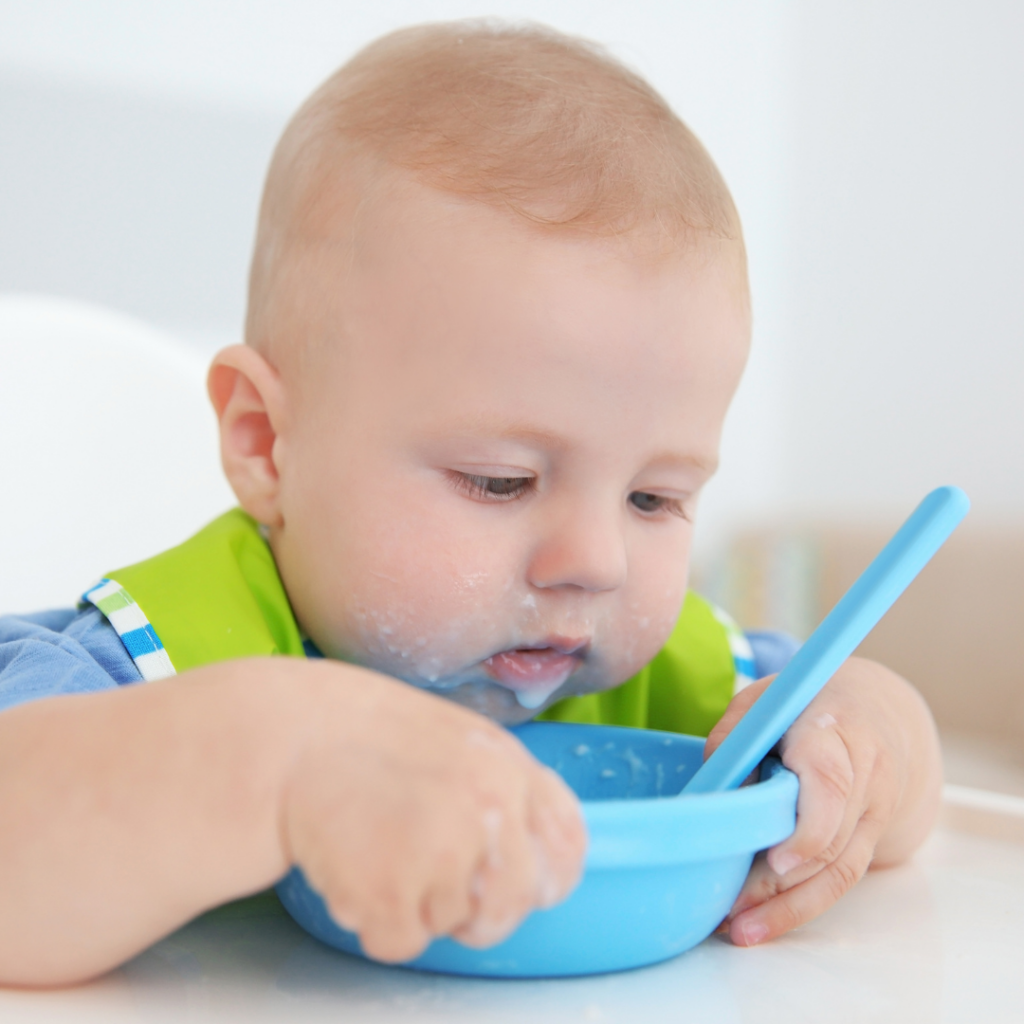
On the other hand, we have to ensure they’re still drinking the minimum milk requirements for their age because that is their primary source of nutrition at this time. This is a tricky balance and that’s why we include milk minimums on the sample schedules above.
Here’s what we want you to remember…it’s always possible to decrease the number of meals or snacks being offered if you find they aren’t drinking the minimum amount of milk required for their age. BUT – skipping over offering solids, finger foods, and a variety of textures by 9 months of age so they get the practice, skills, and nutrition they need, can’t be reversed!
If you find your baby is really struggling with solids, not showing much interest, is gagging a lot, etc., try adding in another meal for a few days to see how that impacts milk feedings. Rather than reacting to one hard day, look at baby’s progress over time. If they’re still drinking the minimum required, keep the extra meal for more practice and to help desensitize that gag reflex. If they aren’t drinking the minimum they require, drop the extra meal and try increasing again in a couple of weeks.
What to do if your baby won't eat
The first thing we always look at is the feeding schedule. No baby is going to have an interest in solids or a desire to try new foods if they aren’t hungry. So you first want to consider the timing between their milk feeding and when you offer solid foods.
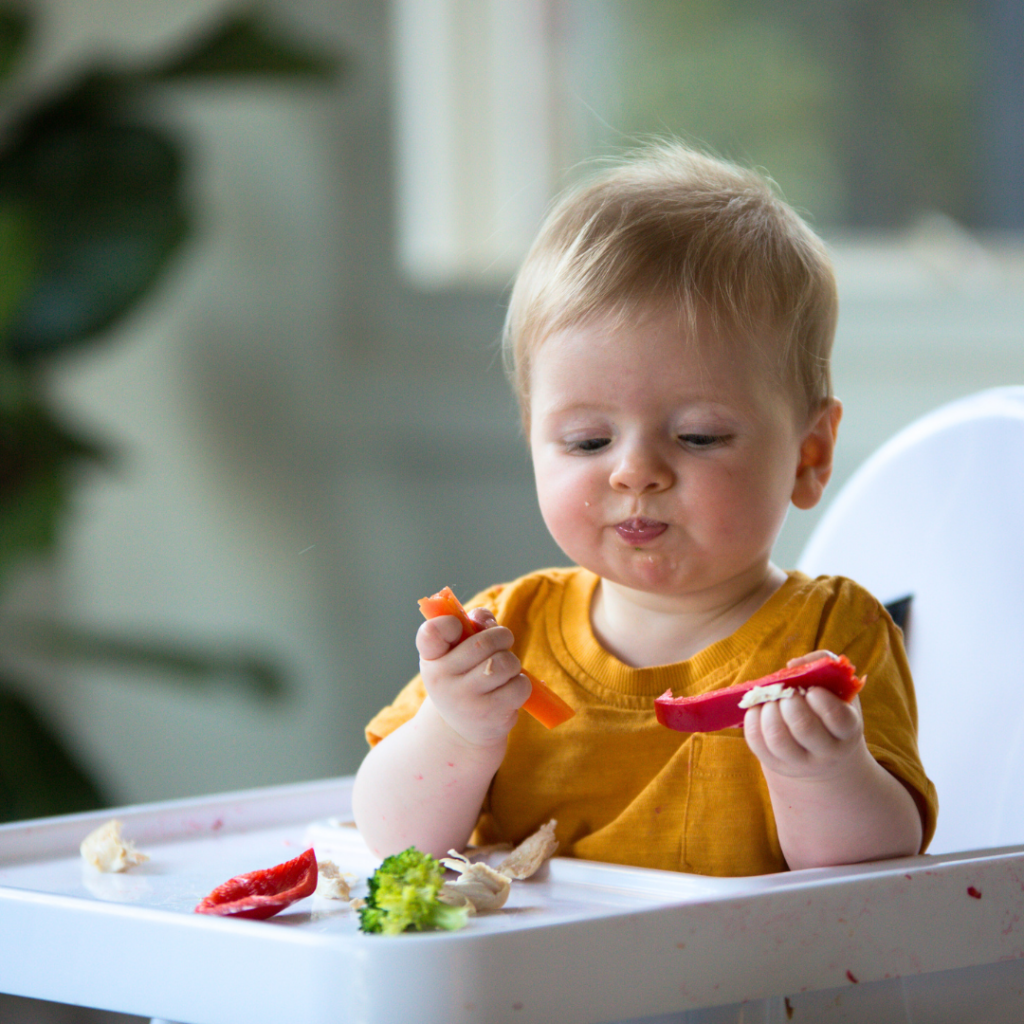
As you can see in the sample schedules above, we suggest a gap between 30 and 90 minutes. That’s because typically this is the range that babies need to develop a true hunger after a milk feeding to have enough interest to eat. If we offer solids before 30 minutes have passed, they’ll likely still be too full, and after 90 minutes they’ll likely be so hungry that they won’t have enough calm hunger to explore a new food, resulting in a lot of frustration. Letting them touch and play with food also supports curiosity and helps them learn to eat foods over time.
If you find your baby isn’t showing any interest, first try increasing the gap by 15 minutes to see how that helps their hunger. If you find they’re getting frustrated and upset, try decreasing the gap by 15 minutes. Keep making changes in 15-minute intervals until you find your baby’s “sweet spot” – because it will differ for every baby!
Know that as they get bigger you may need to adjust this gap again – that’s ok! Pay attention to their cues and adjust accordingly. Learn more about what to do if your baby won’t eat!
When to adjust breast milk or formula to improve solid intake
If you reach a point where your baby still doesn’t have an appetite for three meals a day or is forgoing solids for milk, you can experiment with either offering solids before milk instead of after, whether your baby is nursing often or still taking several formula feeds. Or, you can decide if you want to place limits on the number of nursing sessions, such as sticking to just early morning and late evening, for example.

As your baby approaches one year of age, there needs to be a shift from breast milk and formula remaining the primary source of nutrition through much of the first year to solid foods gradually becoming the main source of nutrients closer to toddlerhood. As mentioned earlier, this is a gradual shift that happens while approaching 12 months old.
The shift requires your baby to get enough practice with solids that they can fill up on them without needing the milk feedings to feel satisfied and full. If they aren’t getting that practice because they’re too full of milk to have enough hunger to eat food, then it may be necessary to try offering solids before offering a nursing or bottle-feeding session. In some cases, offering a little breast milk before the meal can help a baby stay calm enough to eat, while a larger milk feeding may reduce interest in solids. This kind of adjustment can also matter for protecting milk supply if breastfeeding is still happening often.
Check out our complete guide on breast and bottle weaning for all the details you need to make this transition easier for both of you!
Toddler feeding schedule tips
The shift into toddlerhood is a big one – and it happens a lot faster than you think!
We consider your baby to be a toddler once they hit that 12-month mark and are now relying on solid foods as their main source of nutrition as opposed to milk. From 12 to 15 months, most toddlers do best with three solid meals plus two snacks each day. By 16 to 24 months, that pattern is still 3 meals and 2 snacks. Solids are needed for adequate nutrition during this stage, and there are no longer minimum milk requirements for your toddler per day – but there is a maximum!
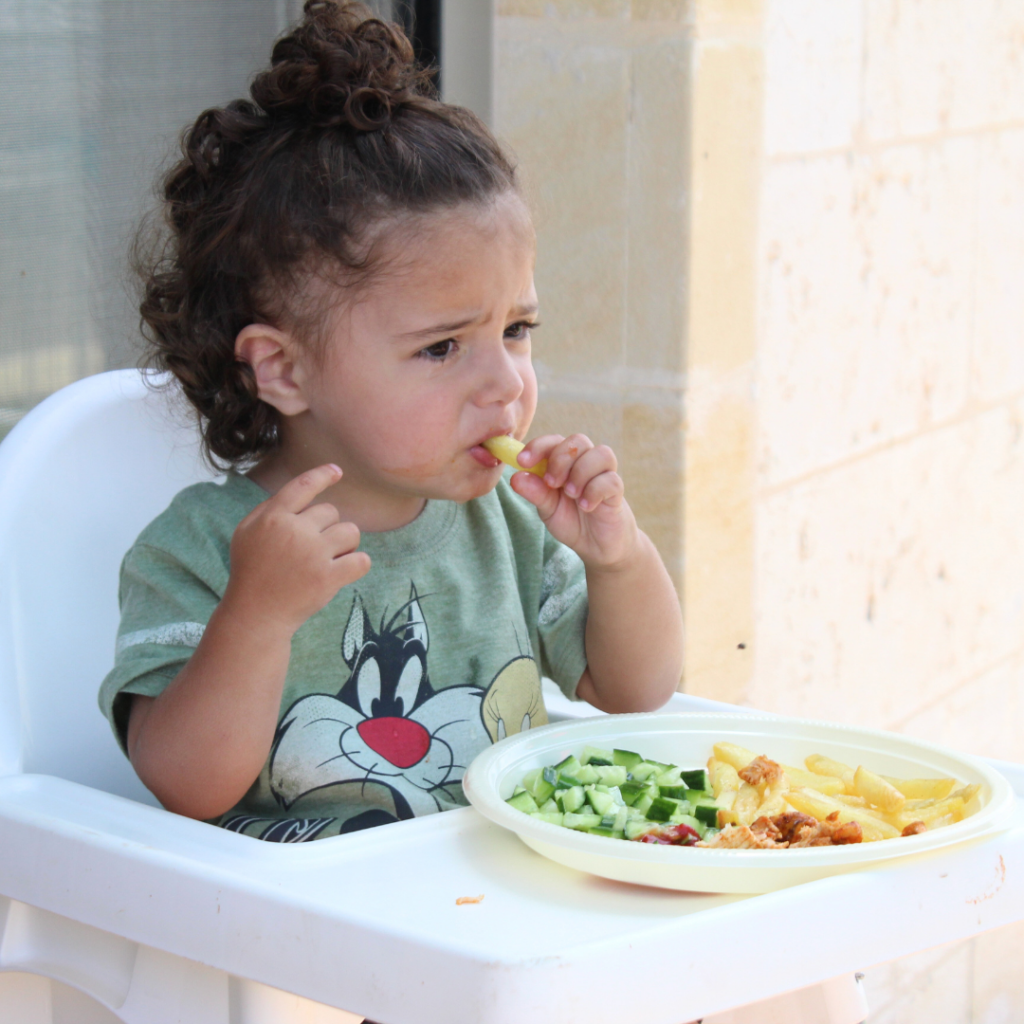
Whether you choose to continue breastfeeding or transition to milk or milk alternative, the maximum milk intake for toddlers is 16oz per day. This means that as you approach 12 months old, you need to be thinking about how much milk they’re consuming and how you’d like to decrease that.
Too much cow’s milk in toddlerhood can cause issues with iron absorption, and can also exacerbate picky eating behavior. Offer cow’s milk in a cup with meals rather than a baby’s bottle. If your toddler is too full on milk, they will have little to no interest in eating table foods, or in trying out any new foods. Keep this in mind and be prepared to continue offering solids according to a feeding schedule in toddlerhood.
If you’re looking for guidance on this transition, check out our breast and bottle weaning guide for everything you need to make this transition easier, plus tips on night weaning too!
Starting solids feeding schedule: FAQs
Why are schedules so important for babies starting solids?
Without at least a general routine, you run the risk of overfeeding your baby, having a baby that refuses solids, or having a hangry baby that’s too frustrated to eat.
Offering food too often can result in the first two outcomes – overeating or having no appetite for solids, just milk. And not offering foods often enough results in a frustrated baby that is too hangry to eat.
Now, you may think that being extra hungry is a good thing – won’t they eat more solids that way? Not necessarily.
When they’re SO hungry, it’s difficult for them to concentrate or be patient enough to learn this new task. It takes a lot of effort, strength, and concentration to be able to hold themselves upright, reach for food, explore the food, and eventually eat it too. And if they’re too hungry or tired, they won’t be able to do those things successfully.
Another thing to consider that we speak about with toddlers frequently is that the goal is not to have a FULL baby all the time. Sometimes we push milk or food so frequently that your baby doesn’t have the option of having an empty stomach ever.
That feeling of fullness therefore becomes their new normal, and responding to every cry or emotion with milk or food becomes yours. Again, our post on feeding cues can help you decipher when hunger is truly the issue.
What if we’re not big on schedules and prefer to follow hunger cues?
That’s ok! As we mentioned, we really want you to be following hunger cues to adjust the schedule anyway, so really it’s taking both into account.
Think of the schedule as more of a guide to ensure your baby is getting the number of milk feedings and solid food meals they need each day, as opposed to a strict timeline for your day. It’s ok to adapt things to your baby and their hunger and fullness cues each day!
Should I offer solid foods morning or night?
When introducing solid foods, we typically recommend adding in a morning meal first, especially when you are introducing foods that are top allergens. It’s important to be able to observe your baby for symptoms of a reaction for a few hours after eating the allergenic food to determine if they have a food allergy. We don’t want them having dinner and then going right to bed for the night, for example. Note: Note: If your baby has severe eczema, a known food allergy, or a strong family history of allergies, it’s a good idea to talk to your pediatrician or allergist before introducing higher-risk foods.
How do I determine the best baby food portion sizes when introducing solids?
Here’s the truth… there’s no magic number that fits every baby. In the beginning stages of starting solids, portion size isn’t really the point. Your baby is learning HOW to eat… how to move food around their mouth, how to swallow, how to explore new textures. The amount they actually eat is secondary to that skill-building.
That said, we know “just don’t worry about it” isn’t actually helpful when you’re standing in your kitchen wondering if you’re doing this right. That’s exactly why we created our free Portions Guide… so you’re not standing there second-guessing every meal. Grab it here and take the guesswork out of “is this enough?
With work schedules there’s no time in the morning for breakfast, when should we feed?
We completely understand how difficult this can be!
In these cases, we recommend choosing a meal during the day that works best for you and your schedules – and in some cases maybe that means a caregiver will be the one to introduce solids. When your baby starts solids, a caregiver can follow the same plan for which foods and meals to offer. If that’s the case, we highly recommend our Baby Led Feeding Program. You can share access with your caregiver as well, plus we have a complete Caregiver Guide inside of it to help you prepare them for introducing solids!
If you have to serve solid meals in the evening during the week because of your work schedule, try not to offer any of the top allergens. Instead, we’d recommend using the weekends to introduce a new top allergen each week. If it helps with planning, keep a simple record of how many meals your baby has and which allergenic foods were offered. This way you can offer them early in the day so they aren’t going to sleep right after eating a highly allergenic food.
Pin it to save the schedules for later!


Edwena Kennedy, RD, BSc. Neuroscience
Founder & Lead Pediatric Registered Dietitian at My Little Eater
Edwena is a Registered Dietitian with over 15 years of experience in pediatric nutrition, two post-secondary degrees (Neuroscience and Applied Human Nutrition), and a mama of two boys. She's the creator of the Texture Timeline™ and is backed by a team of pediatric dietitians and a speech-language pathologist. Meet the full team here.
Edwena Kennedy, RD, BSc. Neuroscience
Founder & Lead Pediatric Registered Dietitian at My Little Eater
Edwena is a Registered Dietitian with over 15 years of experience in pediatric nutrition, two post-secondary degrees (Neuroscience and Applied Human Nutrition), and a mama of two boys. She's the creator of the Texture Timeline™ and is backed by a team of pediatric dietitians and a speech-language pathologist. Meet the full team here.




5 Comments
Sooo helpful! Thank you!
So glad this was helpful!!
This is an incredibly helpful guide for parents introducing solids! I love how you’ve broken the process down into age-appropriate feeding schedules while keeping breast milk or formula, naps, and meal timing in balance. The practical tips for adapting the schedule to each baby’s unique needs make this resource especially valuable. Thanks for sharing such a thoughtful and well-organized guide—it’s sure to give parents more confidence during this exciting stage of their baby’s development!
https://www.imagenish.com/
Do you think this method is easy to apply in practice?
This is super helpful! I love how you broke down the schedule so clearly. The tip about spacing out milk and solids is exactly what I needed to hear. It makes starting solids feel way less overwhelming for a new mom like me.