- Edwena Kennedy, RD, BSc. Neuroscience
- Published: August 24, 2026
If you’ve spent hours preparing a perfect meal only to watch it end up on the floor, you aren’t alone. Dealing with a baby refusing solids can feel incredibly frustrating, especially when you’re worried about their growth or iron intake. It’s easy to feel like you’re failing; however, this food refusal is often a very normal part of learning how to eat!
We’re here to help you replace that mealtime anxiety with a sense of clarity and confidence. In this guide, we’ll explore the common reasons behind food refusal and provide gentle, dietitian-approved strategies to help your little one become a happy little eater!
You’ll learn how to find the right balance between milk and solids, why it might take up to 15 exposures for a baby to accept a new flavor, and how to use responsive feeding to take the pressure off everyone. We’ll move step by step from a state of uncertainty toward a more joyful and connected family table.
Key Takeaways
Food refusal is a normal developmental phase. Babies need time to coordinate tongue, jaw, and breath while processing brand new flavors and textures, so refusal is often just part of the learning curve.
Watch out for the “Milk Trap.” If your baby is 9-10 months and taking in more than 32 oz of milk a day, there may not be much room (or drive) left for solids.
The Division of Responsibility is your new best friend at the table. You decide what, when, and where… your baby decides how much (or if) they eat.
Timing changes everything. Offering solids 60-90 minutes after a milk feed hits that sweet spot where baby is curious, not too full and not “hangry.”
Progress isn’t measured in bites swallowed. It can take 8-15 exposures before a baby accepts a new food, so a lick, a squish, or just sitting calmly at the table all count as wins.
Table of Contents
Understanding Why Your Baby is Refusing Solids
If you find yourself staring at a high chair tray full of food while your little one turns their head away, take a deep breath!
Seeing your baby refusing solids can trigger a wave of anxiety, but it’s helpful to remember that eating is a complex sensory experience and requires a number of oral motor skills. Just as your baby didn’t wake up one day and start walking, they won’t master chewing and swallowing overnight. Babies need time and practice to coordinate their tongue, jaw, and breath while simultaneously processing new flavors and textures.
If your baby refuses food, they may simply be full from milk or too tired to practice all of these new skills. Not to mention other issues like teething or illness, which may also cause food refusal. If your baby is teething, their gums might be too tender for anything other than a soothing bottle or breast. Similarly, a simple cold or ear infection can make swallowing uncomfortable.

Most refusal is just a normal part of learning to eat. But it’s worth knowing the difference between that and more complex feeding challenges that might need some extra support. If your little one’s food refusal has you worried, we’re here for you… you don’t have to figure this out alone. You can learn more about our counseling services here.
Developmental Readiness vs. The Calendar
While most health organizations suggest introducing solids around six months, this is a general guideline rather than a strict deadline.
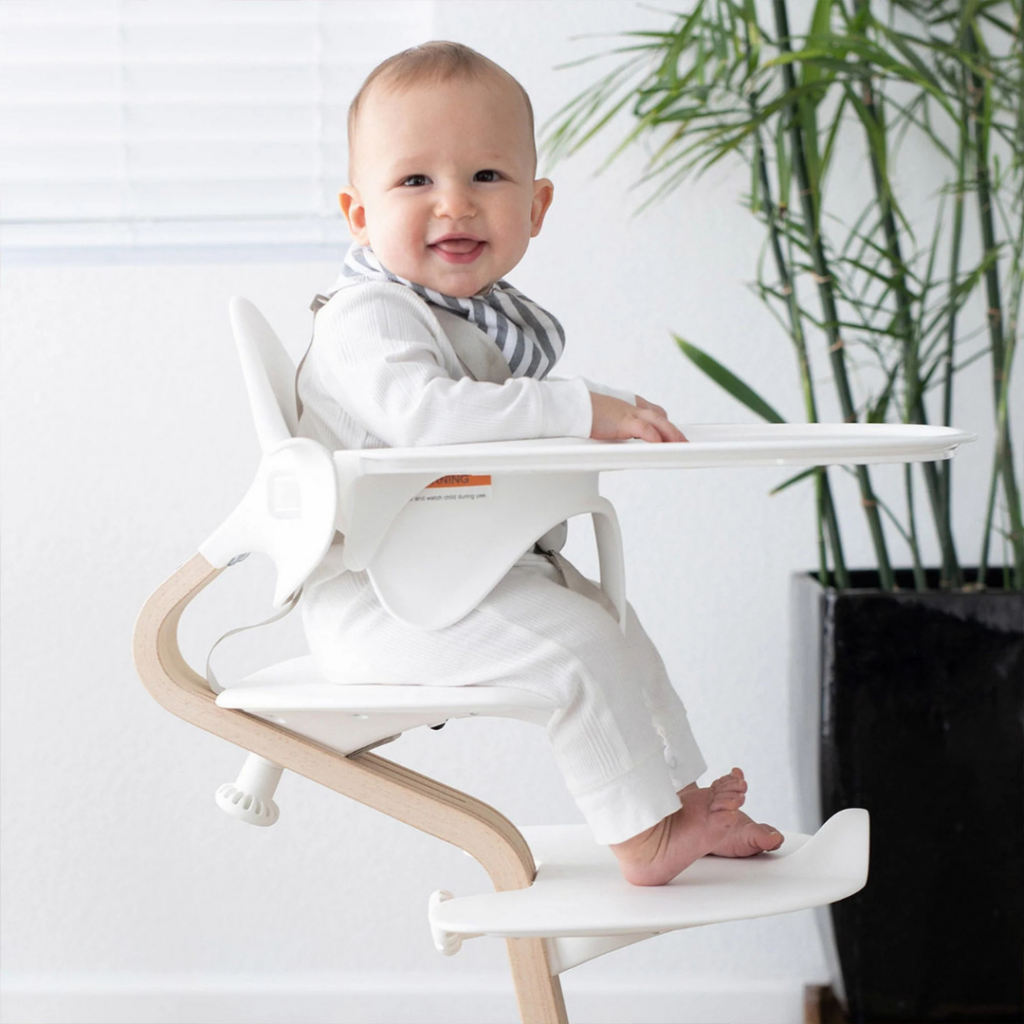
Every baby develops at their own pace. Developmental readiness is the maturation of a baby’s oral motor skills and physical stability that allows them to safely transition from a liquid-only diet to coordinated chewing and swallowing. Before solids are offered, babies should be developmentally ready, with all of the folloing signs:
The ability to sit upright independently
Good head and neck control
The ability to reach for objects and bring them to their mouth with precision
Showing interest in food!
Diminished tongue thrust reflex
And, the baby’s ability to close their lips around a spoon, hold food in their mouth (at least partially), and swallow.
If ALL of these signs aren’t quite there yet, forcing solids can often lead to more refusal. If your little one isn’t showing interest, they might just need another week or two to build the necessary strength.
The Role of the Gag Reflex
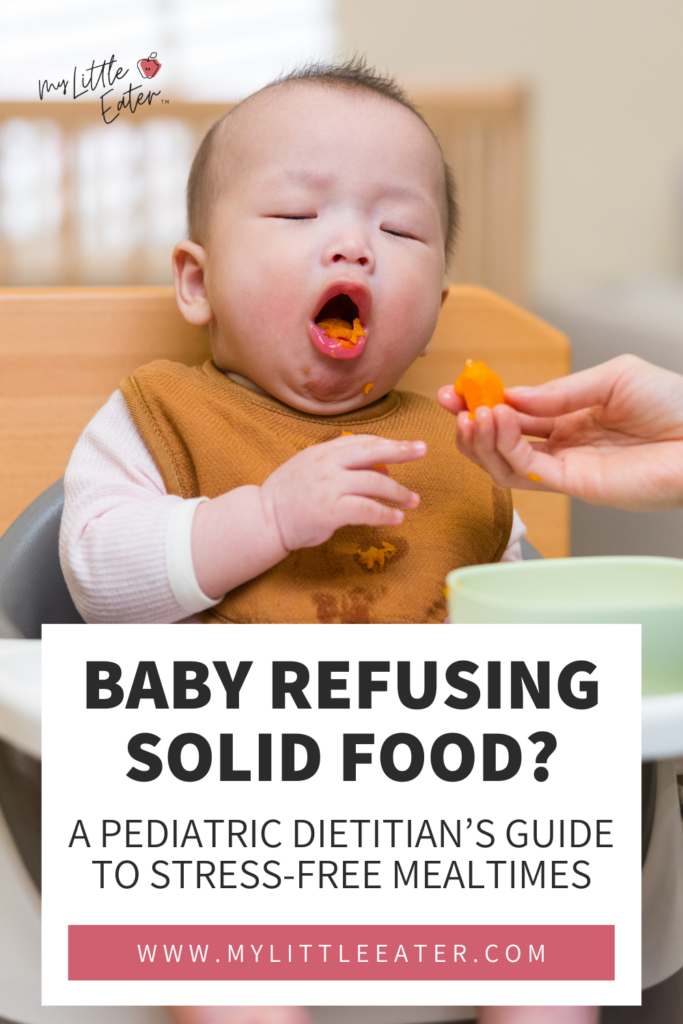
One of the biggest hurdles for parents when starting solids is witnessing the gag reflex. Gagging does NOT mean your baby is refusing or doesn’t like a specific food (it also doesn’t mean your baby is in danger)! A new food texture, flavor, or sensory experience can all trigger the gag reflex.
It’s vital to know the difference between gagging, which is a loud, active safety mechanism, and choking, which is silent and dangerous. When a baby gags, their body is simply learning how far back food can go before it needs to be pushed forward.
If you react with fear or quickly scoop them out of the chair, they may begin to associate the high chair with stress. Stay calm during gagging episodes, never put your fingers in babies mouth and model how to get that food out. Cheer them on and let them know they’ve done a great job once that piece of food comes back out!
This calm, steady energy is a big part of our Baby Led Feeding™ approach… when you stay calm, your little one feels safe enough to keep exploring instead of picking up on your worry.
Age-Specific Refusal: What’s Normal from 6 to 12 Months
As your baby grows, their relationship with food will shift. Understanding these developmental phases is the best way to manage a baby refusing solids without totally losing your mind.
What looks like a rejection of your hard work is often just a sign that your little one is busy mastering a new skill or dealing with discomfort. By recognizing these patterns, you can adjust your expectations and keep the mealtime environment positive and pressure-free.
6-7 Months: This is a “flavor and texture shock” phase. After about 6 months of a purely liquid diet, the flavors and different textures of all of these brand new foods can be overwhelming. A gag or funny face doesn’t mean you should never offer eggs or yogurt again, in fact, you should do the opposite! Continue exposing your baby to these foods so they can grow to love them overtime.
8-9 Months: Teething often peaks during these months, making chewing and practicing oral motor skills uncomfortable. This is also when the pincer grasp starts to develop; your baby might refuse to be spoon-fed because they’re eager to pick up small bits of food themselves.
10-11 Months: Independence becomes the primary motivator. Your baby is discovering their own will, and saying “no” to a spoonful of peas is a powerful way to practice autonomy. Food throwing also tends to ramp up at this age as babies discover “cause and effect”.
12 Months: As they transition into toddlerhood, their growth rate naturally slows down. They simply don’t need as many calories per pound of body weight as they did during the rapid growth of early infancy. You can expect some skipped meals and more food refusal at this age!
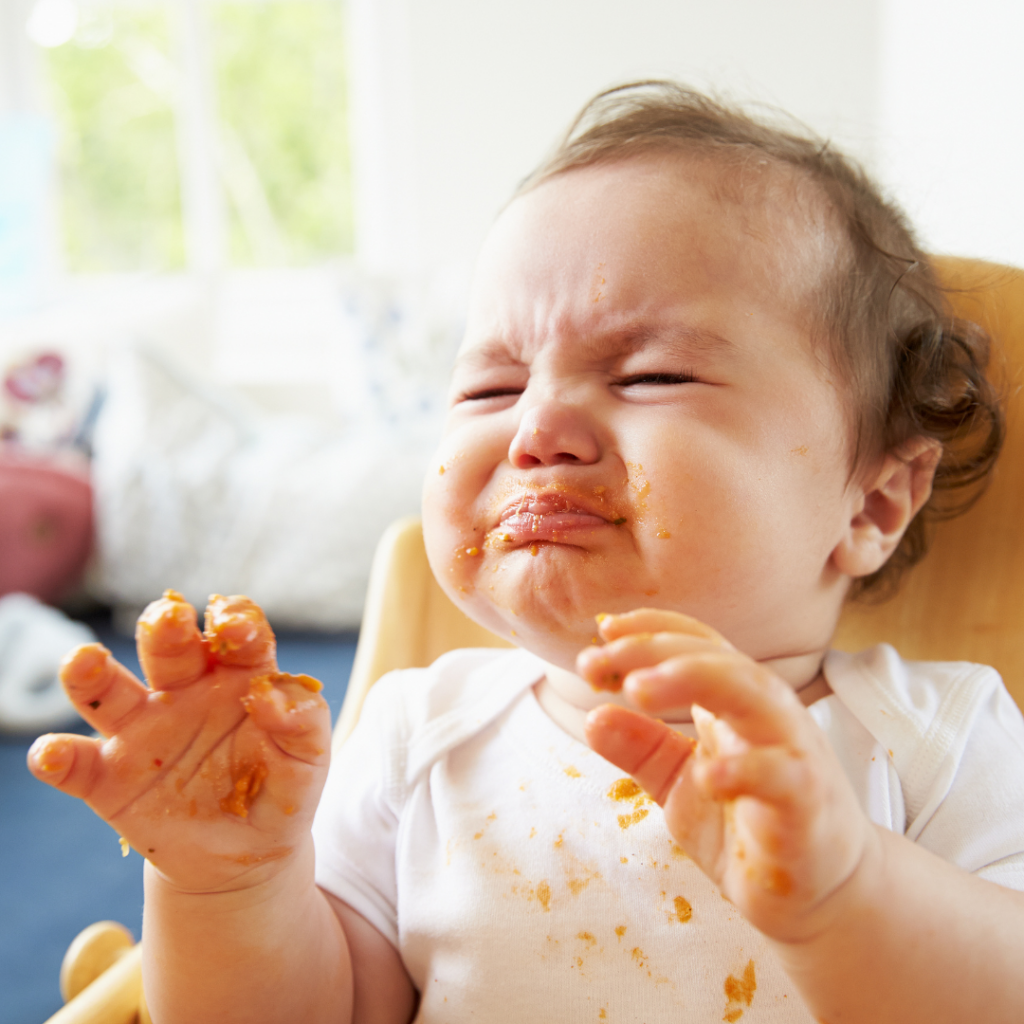
The 9-Month "Slump"
It’s common for parents to report a sudden drop in interest around the nine-month mark. This often coincides with major gross motor milestones like crawling or pulling to stand, and practicing these new skills can briefly matter more to your baby than meals.
When a baby’s brain is focused on moving, sitting still in a high chair feels like a distraction. During this time, continue offering 3 solid food meals per day and focus on maintaining “exposure” by letting them smell food, with touching food counting as progress too, without worrying about how much they actually swallow.
If your baby is over 9 months and still refusing nearly all solid foods, it might be time to bring in some extra support.This is more common than you’d think, and you don’t have to figure it out alone – we’ve got you. You can learn more about our counseling services here.
Transitioning from Purees to Finger Foods
If your baby stays on smooth purees for too long, they can get stuck in a rut where lumpy foods, finger foods, or anything more textured gets an immediate “no thanks.” This is extremely common… but it’s also fixable!
That’s exactly why we created our Texture Timeline™, to help baby move through textures step by step, without getting stuck on the easy stuff for longer than they need to. And if all these transitions feel like a lot, our Baby Led Feeding™ Program walks you through exactly how to offer age-appropriate textures safely, so you’re never left guessing.
In addition, handing over some control (by letting your baby self-feed with preloaded spoons or finger foods) lets your baby take the lead, and that alone can cut down on refusal… feeling in charge of their own bite can make a big difference!

The Milk Trap: Why Baby Refuses Solids but Drinks Milk
Many parents find themselves in a cycle where their baby happily drains a bottle or breastfeeds but turns their head away from any food offered.
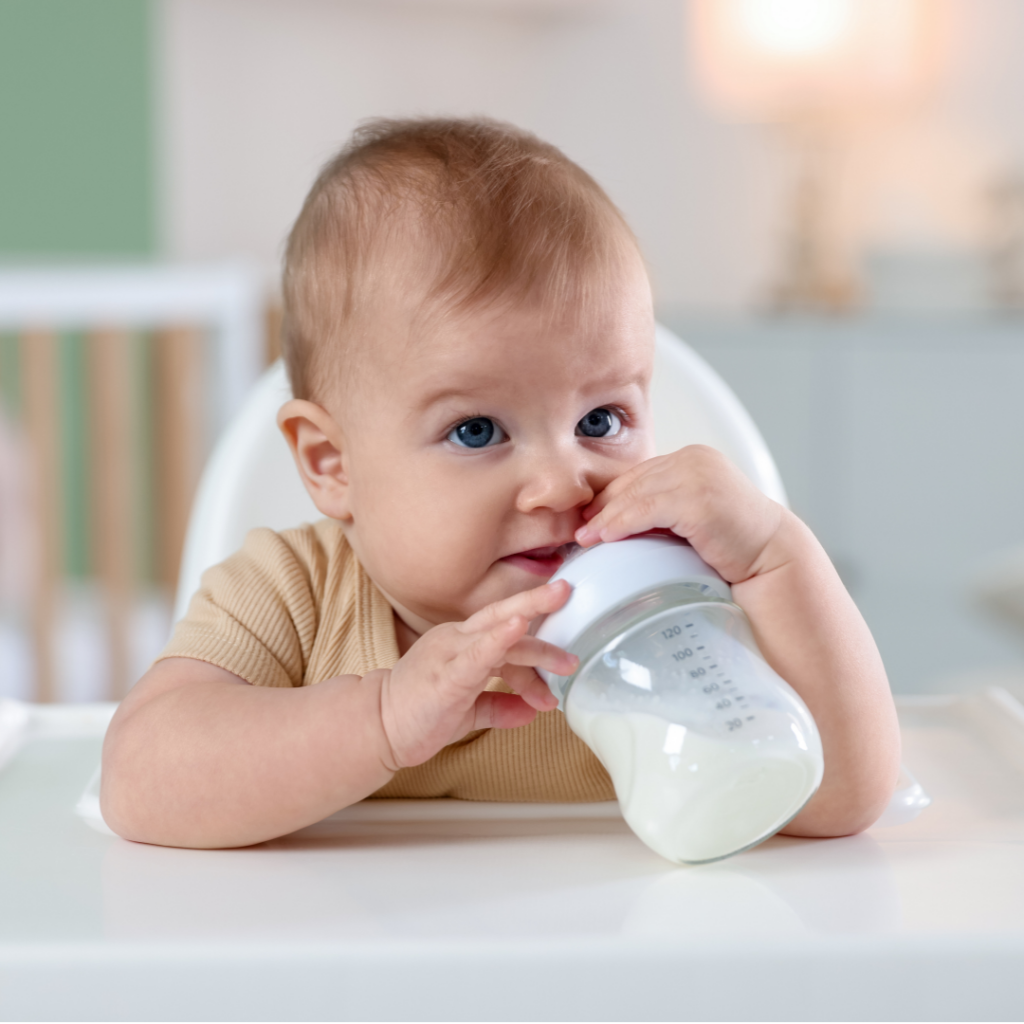
This is what we call “The Milk Trap.” Milk is familiar, comforting, and effortless to consume. If a baby’s tummy is already full of milk, they simply won’t have the biological drive to work through the physical effort of chewing. When you’re dealing with a baby refusing solids, the first place to look is often the total daily milk volume (this includes night feeds too!) and when solids are being offered.
For a baby between 9 and 10 months old, consuming more than 32 ounces of milk in a 24-hour period often leaves very little room for anything else. While milk provides essential nutrients, it lacks the varied flavors and textures necessary for oral-motor development (particularly during the critial period of 6-9 months) and long-term satiety.
If milk remains the primary source of calories too far into the first year, the transition to family meals becomes significantly more difficult. Your baby isn’t being “picky” in this scenario; they’re simply satisfied by the easiest option available to them.
Optimizing Your Feeding Schedule
Timing is everything. Feeding solids too soon after a milk feed can lead to refusal. We recommend finding the sweet spot that works best for your baby, when they aren’t too tired or too hungry. This is roughly 60 to 90 minutes after a milk feed, though some families need to experiment to see when their baby is most receptive.
If you wait too long, you’ll likely end up with a “hangry” baby who is too frustrated to practice the complex skill of eating. A starving baby will always choose the bottle because it’s the fastest way to feel full. By offering solids when they’re alert but not ravenous, you create a low-pressure environment for exploration.
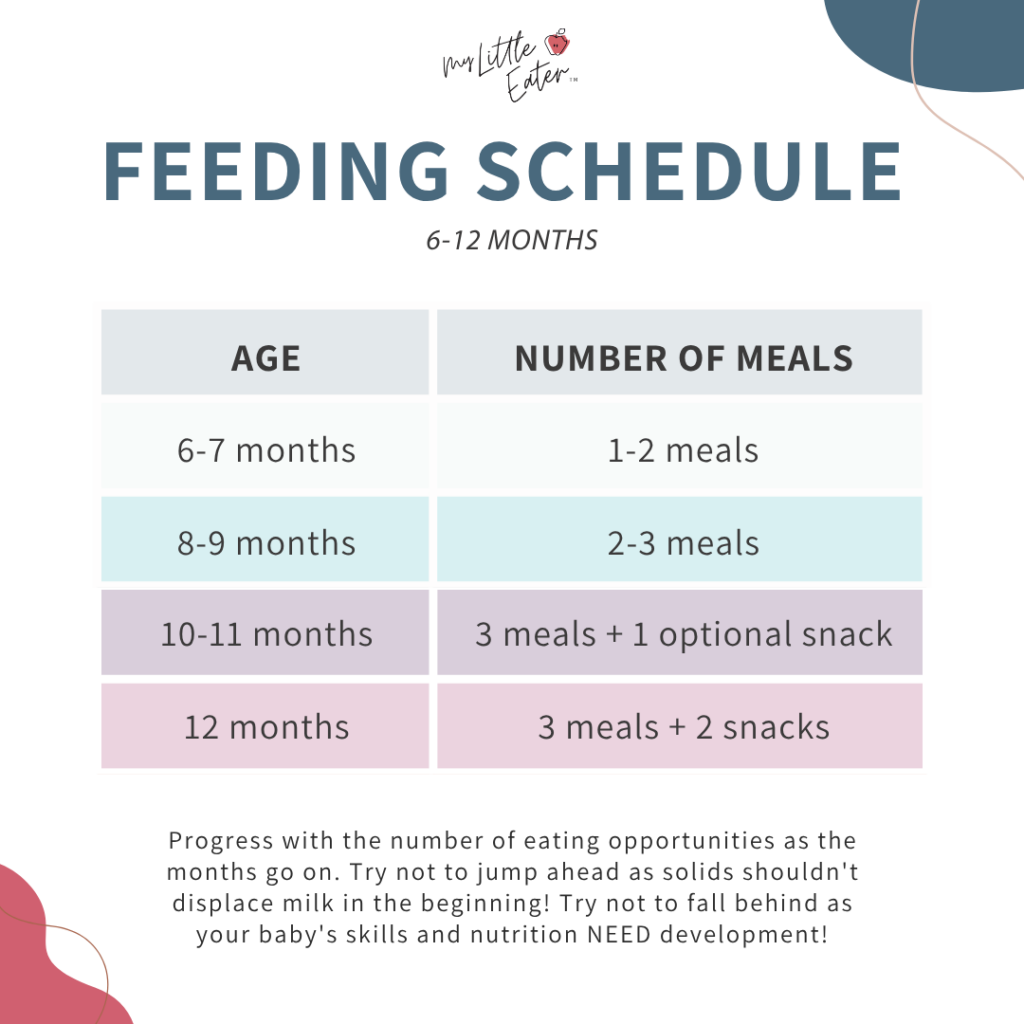
As your baby approaches their first birthday, you can gradually decrease milk volumes to make space for three structured meals and 1-2 snacks per day, remembering that regular practice matters more than perfect intake at any one meal. You can learn all about milk & meal requirements by age and setting up a feeding schedule for your baby, here.
Iron and Nutrition Concerns
Around the six-month mark, babies rely heavily on breast milk or formula even as their natural iron stores begin to deplete and solids are introduced.
Offering iron-rich foods becomes critical for healthy brain development and energy levels starting at 6 months. If your baby only takes two or three bites, those bites need to be as nutrient-dense as possible. Prioritizing foods like soft ground meats, lentils, or seafood ensures they get the minerals they need even on “low-appetite” days.
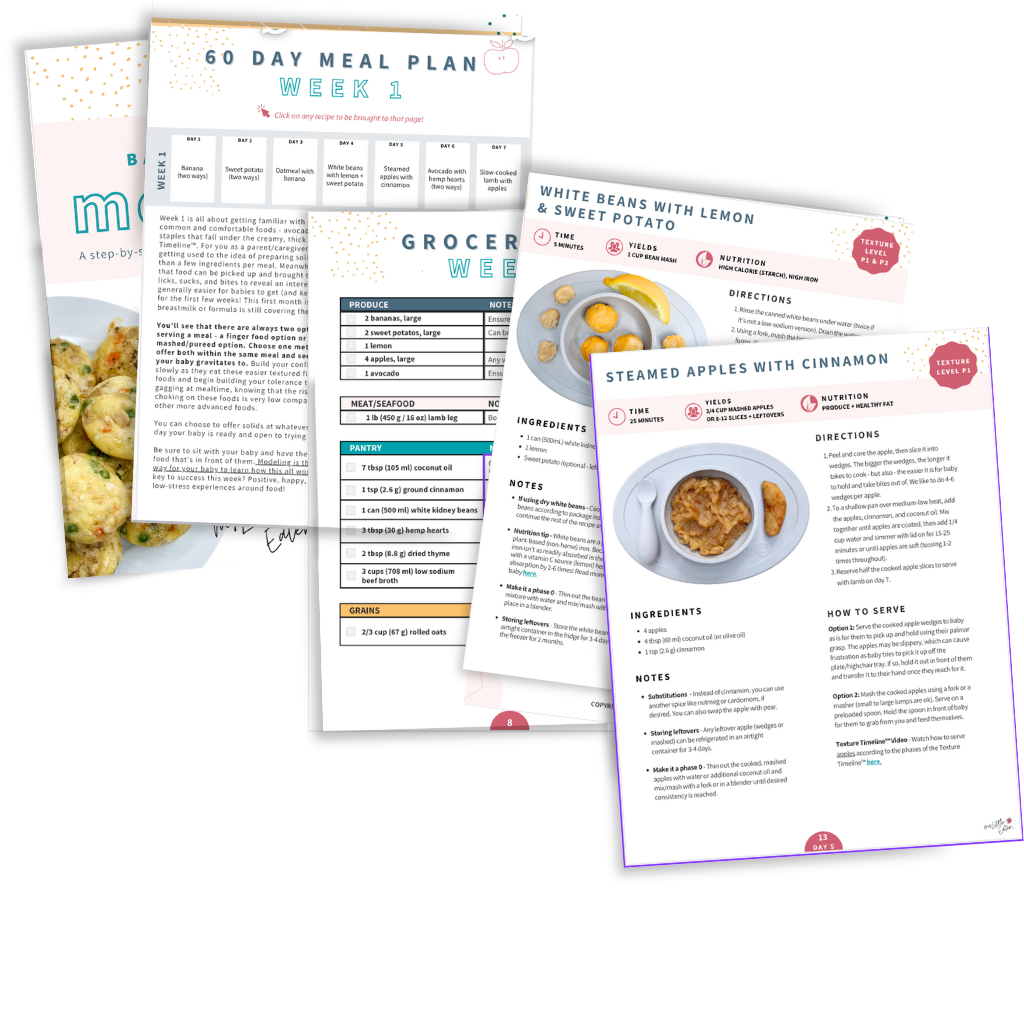
To help you navigate this transition without any of the guesswork, our 60 Day Baby Meal Plan provides structured, iron-focused recipes designed to make every bite count.
5 Strategies for How to Handle Food Refusal
Shifting your focus from “getting them to eat” to “helping them explore” can transform the energy at your table almost immediately, because babies learn through curious, hands-on experiences rather than persuasion. If you are currently struggling with a baby refusing solids, these five strategies can help reset your approach and lower the stress level of your entire family.
1) Embrace the Mess
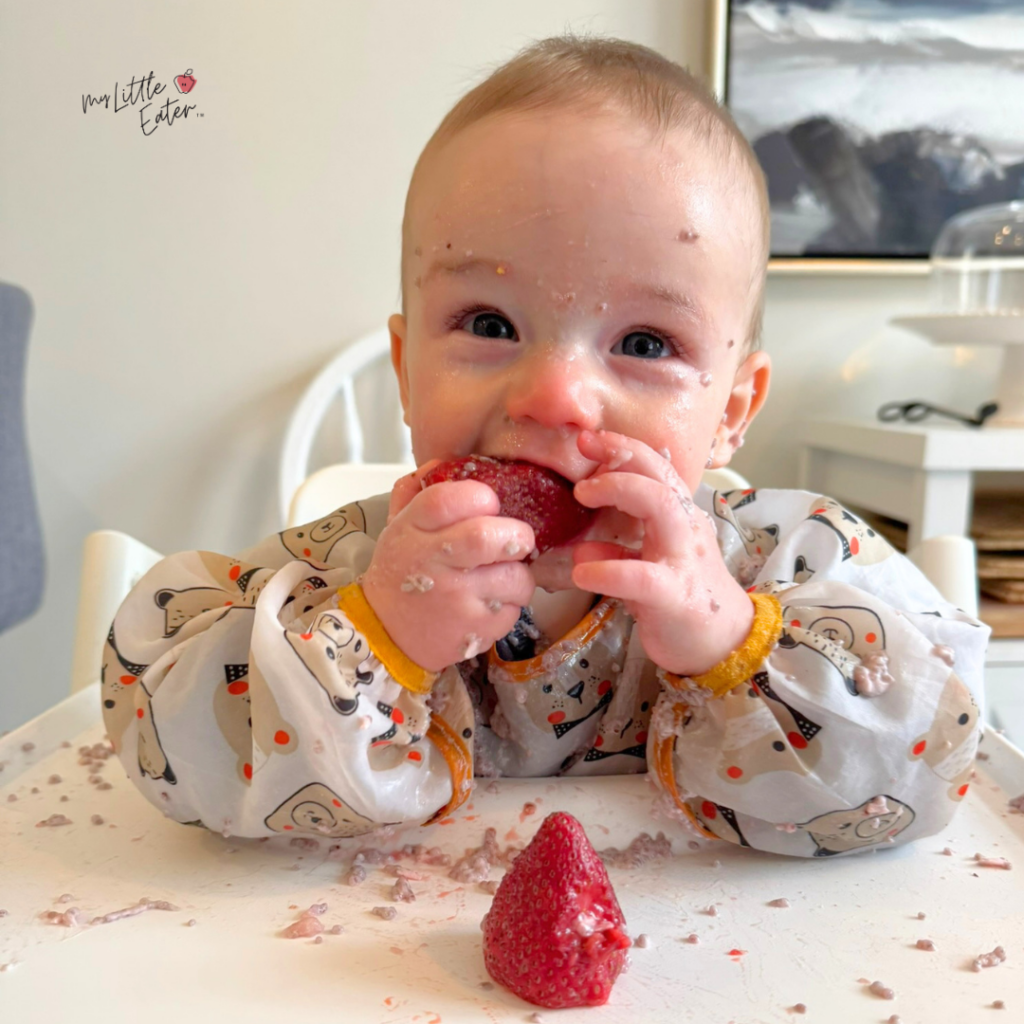
Smearing, squishing, and even dropping food are all forms of sensory exposure. When a baby plays with their food, they are learning about its properties and safety before it reaches their mouth. So the next time you want to grab a wipe mid-meal… try to pause. That mess is actually your baby’s brain hard at work, gathering information about texture, temperature, and smell before they ever decide to take a bite. It might feel chaotic, but it’s a totally normal (and necessary) part of learning how to eat.
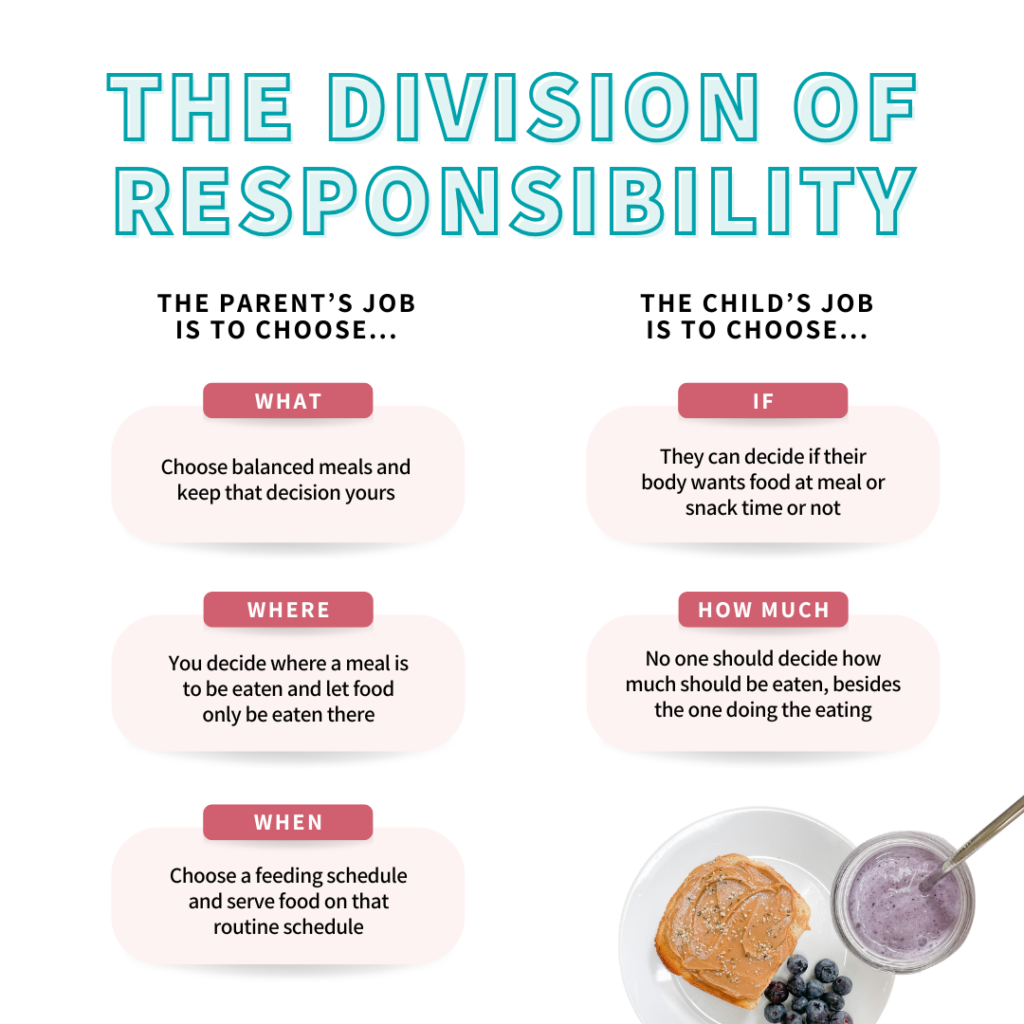
2) The Division of Responsibility
This framework is the gold standard for peaceful meal times. You are responsible for what, when, and where food is served; your baby is responsible for how much they eat and whether they eat at all. This one can feel SO hard to trust, especially when you’re worried about growth or nutrition. But here’s the thing… your baby has an incredible internal hunger cue system, and our job as parents is to protect it, not override it. When you let go of the “how much,” you’ll often find your little one relaxes into eating more, not less.
3) Family Style Dining
Serving healthy foods on the family table, instead of making a separate meal, helps them feel like a participant in a social event rather than the subject of a feeding experiment. Babies and toddlers are natural copycats. When they see you enjoying broccoli instead of watching you watch them eat it, food stops feeling like a test and starts feeling like something everyone just… does together. Bonus: the same meal for the whole family means less work for you too!
4) Sensory Play
Interacting with food outside of the high chair allows for low-stakes chances to explore food. This builds familiarity without the immediate expectation of consumption. Think finger painting with purees or washing fruits and veggies. There’s zero pressure to eat here, which is exactly the point. The more familiar a food feels through play, the less scary it becomes when it eventually lands on their plate. Learn more about sensory play with food, here.
5) Eliminating Pressure
Pressuring your baby or toddler to eat often triggers a fight-or-flight response, which can physically shut down a their appetite. We know it’s tempting to bargain or cheerlead them into eating (we’ve all been there). But pressure, even the well-meaning kind, tends to backfire and make food refusal worse over time. Letting go of “just try it” is one of the hardest and most powerful shifts you can make at the table. Learn more about the many forms of pressure, here.
The Power of Food Modeling
Your baby is a tiny copy-cat who learns by watching you eat your own food. If they see you enjoying a variety of foods, they’re much more likely to eventually follow suit.
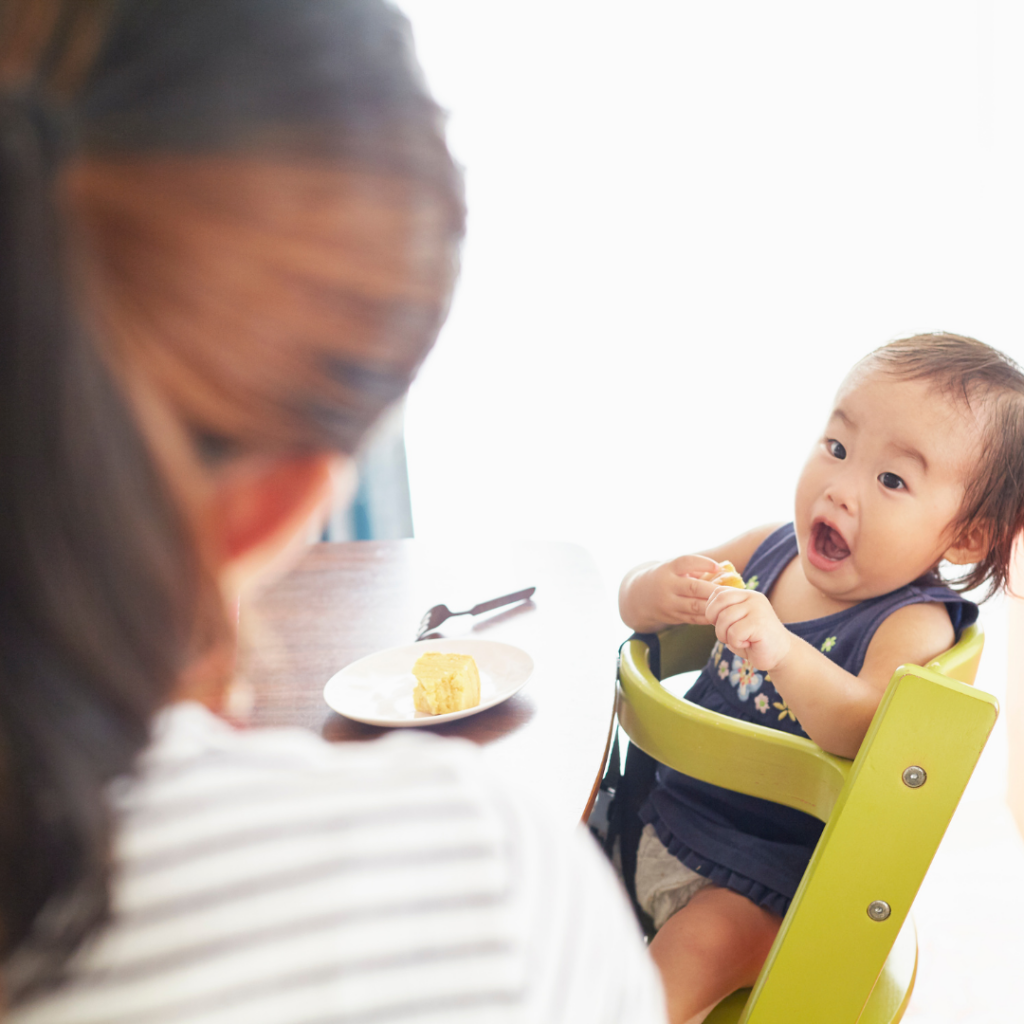
Use “exaggerated chewing” by opening your mouth slightly and making obvious jaw movements to show them exactly how to move food around. If you’re feeling tense about mealtimes, your baby will pick up on that energy. Try to take a few deep breaths before sitting down to ensure the atmosphere remains light, fun, pressure-free and encouraging. If you want to dive deeper into these techniques, our FREE starting solids workshop is a wonderful place to begin building your confidence.
Moving Beyond Refusal: Building a Confident Eater for Life
When you’re navigating a baby refusing solids, it’s easy to focus only on the volume of food swallowed, but most babies build confidence with solids over time, and true progress shouldn’t be measured by the amount of spoonfuls they consumed at one given meal.
A successful meal might simply be your baby touching a new texture, licking a piece of fruit, or sitting calmly while you eat. These tiny interactions are the building blocks, and some babies love self-directed exploration more than actual eating at first. Research indicates it can take between 8 and 15 exposures to a new food before a child accepts it (1). If you offer broccoli today and they throw it, don’t cross it off the list forever. Consistency is your most powerful tool; therefore, keep serving those foods without pressure, knowing that every exposure counts toward eventual acceptance.
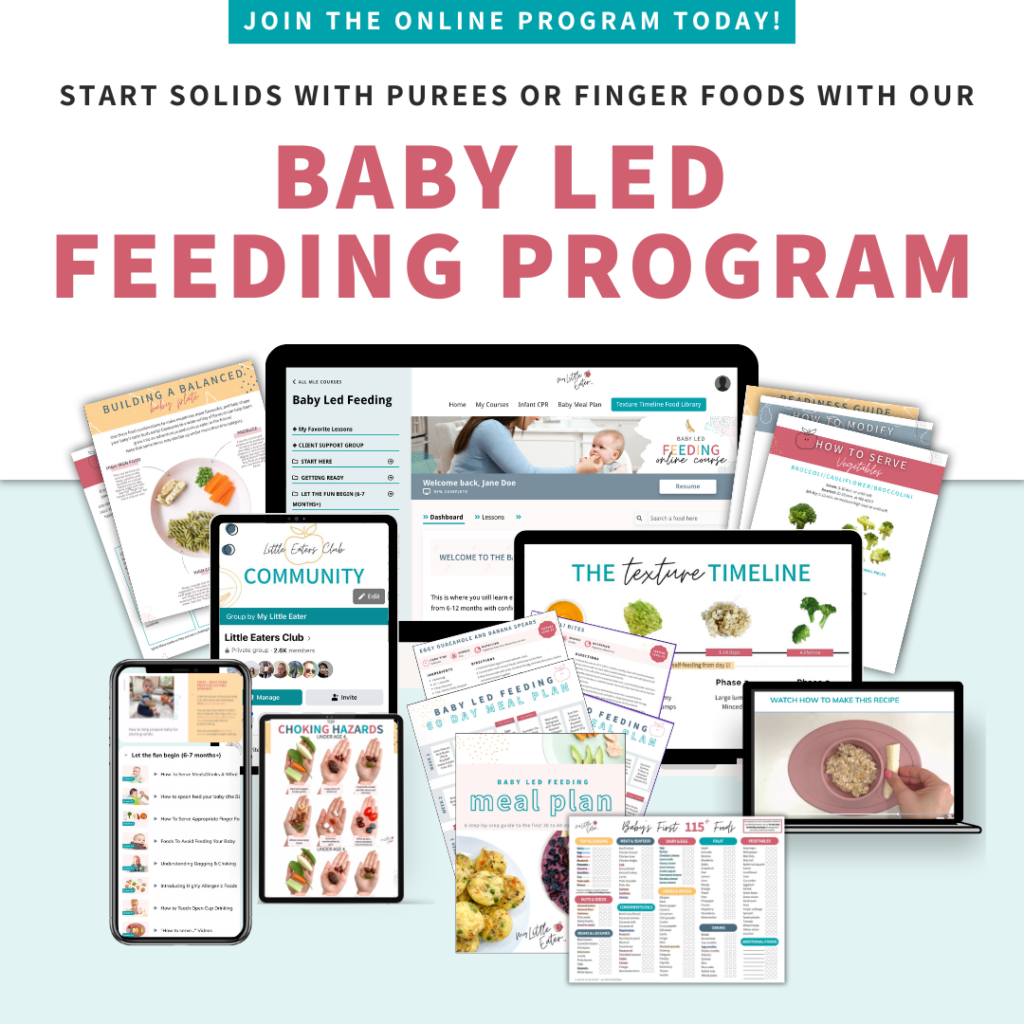
Our Baby Led Feeding™ Program provides a structured roadmap for this entire journey, helping you move from the first bite to full family meals with ease. It simplifies the transition by giving you the underlying philosophy behind every developmental stage. This ensures you never have to guess if you’re on the right track. By shifting your perspective, you’ll start to see that refusal is just a request for more time to learn. You are providing the opportunity, and your baby is doing the hard work of learning one of many new skills.
Red Flags: When to Consult a Pediatric Dietitian
While most refusal is developmentally normal, some signs indicate a need for more specialized support, especially if poor weight gain is part of the picture.
If your baby persistently gags or vomits on almost all textures, has concerning weight gain patterns, or shows extreme distress and “fear” responses at the sight of a high chair, it’s time to dig deeper. These red flags suggest that the issue might go beyond typical learning curves. Persistent refusal or suspected oral-motor or sensory problems may also warrant referral to a pediatric feeding therapist. In these cases, seeking personalized guidance through our 1:1 Dietitian Counseling can provide the specific peace of mind and clinical expertise you need to move forward safely.
Frequently Asked Questions
Is it normal for my 7-month-old to refuse all solids?
It’s completely normal for a 7-month-old to show little interest in food, but there are strategies you can implement to help with this! At this stage, your baby is still mastering the oral motor skills required to manage food safely. If your baby is refusing solids, focus on the sensory experience (see the 5 strategies listed above) rather than the volume consumed. Most babies this age are still getting the bulk of their calories and nutrition from milk while learning about solids, which is appropriate as they adjust to starting solids.
How long should I wait after a milk feed to offer solid food?
Aim for a 60 to 90 minute gap between a milk feed and a solid meal. This window ensures your baby isn’t too full to be curious but isn’t so hungry that they become frustrated. If you offer food too soon after milk, they won’t have the biological drive to eat. Conversely, a ravenous baby will usually demand the comfort and quick satisfaction of a bottle or breast instead.
My baby won’t eat solids but loves purees, should I be worried?
There is no need for immediate worry because purees are still considered solid foods. However, it’s important to gradually introduce thicker textures, mashed/lumpy foods, and finger foods to prevent your baby from getting stuck on easy textures for too long. The earlier you do this, the better because your baby is still able to rely on milk as they learn to master all of these new textures. You can use our Texture Timeline™ to help your baby progress to a wide range of advanced textures and finger foods in a timely manner!
What are the best first foods to offer if my baby is refusing the spoon?
Soft, graspable finger foods are excellent alternatives if your baby is refusing the spoon. To start off, try offering ripe avocado wedges, baked sweet potato, pancakes, steamed broccoli florets, banana spears, or egg strips. These foods (which are all safe from 6 months+) allow your baby to take control of the feeding process, which often reduces mealtime resistance as it keeps the whole process baby-led. When they can touch and feel the food themselves, they build the confidence needed to eventually bring it to their mouth and eat it on their own terms.
Could teething be the reason my 10-month-old suddenly stopped eating?
Yes! Teething is one of the most common reasons for a sudden “strike” in eating. When gums are swollen and tender, the pressure of chewing can be quite painful for a 10-month-old. You might find that they prefer cold, soothing foods like cold yogurt or soft cooked foods like baked sweet potatoes. Once the tooth breaks through the surface, their appetite and interest in varied textures usually return to their baseline.
How do I know if my baby is getting enough iron if they refuse foods like meat and seafood?
There’s no way to “eyeball” iron levels, so if you’re worried, you can ask your pediatrician for a simple blood test rather than guessing. In the meantime, meat and seafood aren’t the only iron sources… foods like beans, lentils, tofu, and egg yolks all count too. Just pair those plant-based options with a vitamin C food (like tomato or strawberries) at the same meal, since that combo helps baby’s body absorb the iron much better! Aim to offer high-iron foods at least twice per day once baby is consuming 3 solid food meals at 9 months of age.
Should I force my baby to eat if they are falling behind on their growth chart?
You should never force a baby to eat, even if you have concerns about their growth. Instead, follow your baby’s cues rather than pressure intake, since pressuring a child often leads to a negative association with the high chair and can actually decrease their overall intake over time. Work closely with your baby’s healthcare team to monitor their curve and focus on offering high-calorie, nutrient-dense foods. Dietitian support can help you create a stress-free plan that prioritizes safety and growth, and if a child is not gaining weight appropriately, the pediatrician may suggest additional feeding support.
Can I skip purees entirely if my baby refuses to be spoon-fed?
If being fed by you is the issue, you can try offering purees on a preloaded spoon and handing it over to your baby to keep them in control. You can also skip traditional purees and move directly to finger foods. This approach is the foundation of Baby Led Weaning and is often the perfect solution for a baby refusing solids because they want more independence. By skipping the spoon, you allow your baby to explore textures at their own pace.
PIN THIS INFO TO SAVE FOR LATER!

References
1) Williams, K. E., Paul, C., Pizzo, B., & Riegel, K. (2008). Practice does make perfect: A longitudinal look at repeated taste exposure. Appetite, 51(3), 739–742. https://doi.org/10.1016/j.appet.2008.06.010

Edwena Kennedy, RD, BSc. Neuroscience
Founder & Lead Pediatric Registered Dietitian at My Little Eater
Edwena is a Registered Dietitian with over 15 years of experience in pediatric nutrition, two post-secondary degrees (Neuroscience and Applied Human Nutrition), and a mama of two boys. She's the creator of the Texture Timeline™ and is backed by a team of pediatric dietitians and a speech-language pathologist. Meet the full team here.
Edwena Kennedy, RD, BSc. Neuroscience
Founder & Lead Pediatric Registered Dietitian at My Little Eater
Edwena is a Registered Dietitian with over 15 years of experience in pediatric nutrition, two post-secondary degrees (Neuroscience and Applied Human Nutrition), and a mama of two boys. She's the creator of the Texture Timeline™ and is backed by a team of pediatric dietitians and a speech-language pathologist. Meet the full team here.
More Blogs Like This...