- One Comment
- Edwena Kennedy, RD
Let’s be real—starting solids can feel really overwhelming. With one Google search, you’re flooded with advice: start with rice cereal! Avoid fruit! Wait to offer grains! Meat only diet! 😵💫
The truth? You don’t need rigid rules or a one-size-fits-all schedule. You need a clear understanding of what foods actually support your baby’s development and how to serve them in a way that’s safe, practical, and nourishing.
This stage isn’t about doing it perfectly. It’s about giving your baby the chance to explore real food, practice new skills, and meet nutritional needs that breast milk or formula alone can’t fully cover anymore.
So, whether you’re starting baby-led weaning (BLW), traditional spoon-feeding, or doing a flexible, blended approach — we’ve got you covered with evidence-informed guidance on what to eat for the best foundation starting solid foods.
Not sure how to confidently begin your baby’s solid food journey? You’re not supposed to figure it all out alone. That’s exactly why we created the How to Start Solids Workshop — a step-by-step guide that shows you exactly what to serve, how to serve it, and how to set up the first few days of feeding for success. Whether you’re anxious about choking, unsure about what foods to start with, or just want a solid plan, this workshop gives you the tools (and peace of mind) to begin with confidence.
Table of Contents
What makes a good first food for baby led weaning (BLW)?
First off, know that babies don’t need watered-down cereal or veggie purées just because it’s “what our parents did”. In fact, the types of foods we want to focus on, especially in the first stage of solids, are the complete opposite.
What babies do need are:
Iron and zinc
Healthy fats
Energy-dense carbohydrates (like starch)
And plenty of opportunities to practice oral-motor and fine motor skills
Iron rich foods: The Top Nutrient to Focus on
Iron is absolutely essential starting around 6 months. While babies are born with a store of iron built up during pregnancy, those stores naturally begin to drop by 6 months—right around the time they’re developmentally ready to start solids.
Breast milk is amazing, especially for fat, immune support, and bonding—but it’s low in iron. And iron is critical for your baby’s cognitive development, energy levels, and immune system. So when we say “food before one is NOT just for fun,” this is what we mean. It serves a biological purpose and we must meet this need through the right types of food (namely – meat and fish products, with a few other exceptions).
High Fat Foods: Brain Fuel Your Baby
Fat is crucial in the couple years of life, especially for babies’ brains and nervous systems, which are undergoing rapid growth during this time. The brain is nearly 60% fat, and your baby’s is growing fast—doubling in size during the first year alone!
Breast milk is naturally high in fat (amazing!), but as solids begin to make up a bigger portion of baby’s intake, fat-rich solid foods (like butter, ghee, fatty meat, egg yolks etc.) are key to keeping that growth on track.
Starchy Foods: Energy dense superstars
Alongside iron and fat, starchy foods play an important role in supporting your baby’s rapid growth. As babies become more active—learning to sit, crawl, and explore—they need a reliable source of energy-dense foods to fuel their movement and development. Starches provide complex carbohydrates, which help keep babies full, satisfied, and energized between milk feeds. Think roasted sweet potatoes, oats, and ripe bananas—all soft, nutrient-rich options that are easy to prepare and modify for self-feeding. Many of these also offer bonus nutrients like prebiotic fiber, potassium, and B vitamins, making them excellent staples in your baby’s early diet when served alongside iron-rich and high-fat foods.
Runner up: Produce (aka fruit/veggies)
Many parents love the idea of starting with steamed or roasted broccoli florets or blended spinach or mashed berries. While those foods are GREAT to incorporate, be careful that they aren’t the majority of foods that your baby is exposed to for the first little while. The micronutrients that some of these fruits and green vegetables provide are wonderful, but they’re nutritional value is not nearly enough to cover all of the most critical requirements for babies in the first year of life (namely, iron and fat). That being said, we do like to recommend these foods as side options for taste and texture exposure mainly, with the stars of the meals being the iron and fat options.
Note: Some veggies and fruits double up as starchy or high fat foods as well as being great produce options (think potatoes, apples, squash, avocado or artichokes). We think that’s pretty cool 🙂
Ultimately, we don’t believe one specific “best” first food. Culturally, there are so many different foods introduced around the world from various food groups, and babies have thrived for generations on the food of their ancestors.
That being said, we’ve put together our list of dietitian-recommended first foods that we think meet the criteria of being the most nutrient-dense, with a focus on iron and fat in particular.
Best first foods to introduce to babies
Please note that foods with an asterisk are top allergens and should be introduced according to our specific allergen introduction protocol.
1. Sardines*
High-iron food & High-fat food
Before you turn your nose up at sardines, hear us out. Sardines are one of the best first foods for babies that you can offer. For one, they’re so easy to prepare. Just open up a can and serve. Busy parents rejoice.
More than that though, sardines are an excellent source of protein, iron and omega-3s (a type of healthy fat which is critical for healthy growth and brain development in the first 3 years of life). Plus, they’re one of the lowest mercury and safest fish to offer to your baby (see our ultimate fish guide for a complete list of the safest and healthiest fish for babies and toddlers).
Sardines are also extremely soft and easy for your baby to chew for baby led weaning, and fall within phase 2 of the Texture Timeline™. Despite the smell, most babies LOVE the taste of sardines, and exposing them to the flavor early and often will only help you in the long run because it helps prevent pickiness later on.
See the video below for how to serve sardines based on the feeding method and texture phase your baby is in (as a puréed baby food or finger food).
2. Eggs Yolks*
High-fat food & High Iron
Eggs, particularly the yolks, are one of the top first foods for babies because they are so nutrient-dense. The yolk in particular contains a lot of fat, iron, zinc and choline, while the egg white is a high protein food.
Eggs can be made into a puréed baby food with a little bit of breast milk or formula, or they can be served as scrambled eggs, as an egg strip, or hard-boiled and thinly sliced. Baby omelets are one of our favorite options for a baby led approach because they’re so versatile and easy to hold in their hands.
See the video below for how to serve eggs based on different texture phases of the Texture Timeline™.
3. Chicken
High-iron food
Chicken is great iron rich food that is perfect whether you’re taking the baby led weaning approach or are spoon-feeding. Iron and zinc are going to be found in greater amounts in the dark meat (like chicken thighs or drumsticks), although all parts of the chicken are nutrient dense. The other perk of serving dark meat is that it’s softer and easier to chew as a baby led weaning food compared to white meat (like the chicken breast).
Chicken can be puréed into baby food with some chicken broth or meat stock, breastmilk or formula, or offered as very soft pulled pieces of chicken through cooking methods like a slow cooker, braised chicken, or even baked chicken thighs or drumsticks. Don’t be shy with spices, and make sure to keep the skin on while cooking to keep it extra juicy and moist (remove before serving it to your baby).
See the video below for how to safely serve a chicken drumstick to your baby.
4. Beef/Lamb
High-iron food
Beef and lamb are some of the best foods you can offer your baby, especially when you’re prioritizing iron-rich and fatty options to replenish those all-important iron stores that begin to drop around 6 months. Both are excellent sources of heme iron (the most easily absorbed form of iron), along with zinc, B vitamins, and high-quality protein—all crucial for your baby’s immune system, energy production, and rapid growth.
When cooked until soft and tender (think slow-cooked roasts or stews), beef and lamb can be shredded into strips for baby-led weaning or mashed with stock/broth for spoon-feeding. Ground versions can be formed into patties, meatballs, or mixed into other dishes for easy self-feeding. These meats are not only deeply nourishing—they also expose your baby to rich, savory flavors that support flavor development and encourage acceptance of protein foods early on.
Learn more about how to serve meat to babies, and how to serve ground beef specifically. We also have a complete list of the most tender cuts of meat for baby so you have all the info you need when choosing something at the store.
See the video below for how to serve ground beef based on the texture phase your baby is in (as a purée or finger food).
5. Salmon*
High fat food
Salmon is another fish that’s extremely high in healthy fats — specifically DHA omega-3’s — which is great for eye health and is a brain-boosting fat that’s very important for kids under age 3. It’s also one of the safest fish to give to babies (particularly wild-caught Alaskan!) and provides a natural source of protein, vitamin D, and B vitamins, making it a true nutritional powerhouse.
Salmon has an oily, flaky and soft texture that’s easy for babies to eat whether doing baby led weaning (phase 2 of the Texture Timeline™) or purees. You can serve salmon in strips or in large pieces broken off of a full piece of cooked salmon for your baby to hold with their palmar grasp. We also LOVE salmon patties! Just mix the salmon with a bit of cooked potato, quinoa, or rice, form it into patties, and cook on a pan. The patties should firm up nicely while keeping the soft, easy texture so it’s easier for baby to hold and eat.
If your baby continually squishes the salmon in their fist, you can put smaller pieces on their tray to eat with their pincer grasp (9 months+). Alternatively from 6 months+, you could always mash or flake salmon and serve it with another fat-rich food like avocado or full fat yogurt for staying power on a spoon.
See the video below for how to serve salmon depending on which phase of the Texture Timeline your baby is on.
6. Meat Stock
High iron food
Meat stock (not to be confused with bone broth!) is an incredibly nutrient-rich and easy-to-digest for a baby eating solids for the first time. It’s made by simmering meaty bones (like chicken drumsticks or beef shanks) for a shorter time than traditional bone broth — usually just a few hours — resulting in a mild, protein-rich liquid that’s rich in gelatin, amino acids, zinc, and minerals. Meat stock is especially great for babies with immature digestive systems, as it’s gentle on the gut and can help support immune and gut health.
You can offer small sips from an open cup, serve it on a preloaded spoon, or use it to moisten other foods like shredded meat or mashed potatoes.
Watch how to make meat stock below.
7. Avocado
High-fat food
Avocado is of course one of the most common first foods for babies. It’s easy for your baby to mash in their mouth and falls on phase 1 of the Texture Timeline™. This makes it one of the foods that parents feel most comfortable offering first, even with baby’s very new chewing skills.
Avocado is high in healthy fat and is a high-calorie food, both of which are important for your growing baby.
Avocados are very easy to prepare and can be served in a wedge shape, mashed and spread on a piece of toast, or served on a preloaded spoon. You can even leave part of the skin on (be sure to scrub it first if you do) for a better grip for your baby. Or – coat the avocado wedge in something to provide a better grip and an iron boost, like iron-fortified infant cereal.
See the video below for how to serve avocados based on the texture phase your baby is in (as a puréed baby food or finger food).
8. Liver
High-iron food
If there’s one first food that truly deserves “superfood” status for babies, it’s liver. While it might not be the most popular pick on many parents’ lists, it’s actually one of the most nutrient-dense foods you can offer.
Liver is packed with easily absorbed (heme) iron, vitamin A, zinc, B vitamins, choline, and more—all of which support brain development, iron stores, and your baby’s overall immune function and energy levels.
It’s also soft when cooked properly and super versatile: try offering it mashed and mixed with avocado, blended into a purée, or shaped into baby-friendly meatballs. A little goes a long way, so offering liver once or twice a week is plenty to reap the benefits. If you’re feeling unsure — don’t worry — most babies love the rich taste, especially when served warm and there is early exposure to it!
9. Cooked Apple
Starchy food
Cooked apple is a simple, wholesome first food that’s not only delicious but also loaded with benefits. When gently steamed, simmered or even roasted, apple wedges become soft enough for babies to safely gum and self-feed — making them perfect for both baby-led weaning and spoon feeding. PS. Raw apples are one of the top choking hazards for babies so cooking it first or shredding it if raw is a must.
Apples are a great source of vitamin C, which improves iron absorption from other foods, so it’s great to pair with any of the heme or non-heme iron sources listed in this blog!. Plus they offer pre-biotics and fiber to support healthy digestion.
You can serve apple slices as steamed or roasted apple wedges, mash them with a fork for a chunky texture, or even mix them into oats or yogurt for a flavor boost. And no — offering sweet fruits like apples early on won’t “ruin” your baby’s taste buds! It’s all about offering a variety of flavors consistently. Cooked apples pair beautifully with proteins or iron-rich options like oats or liver for a well-rounded meal.
Watch how to serve apples to your baby in the video below.
10. Sweet potato
Starchy food
Sweet potatoes are a classic first food for babies—and for good reason! They’re naturally soft when cooked, easy to hold as a finger food, and are an energy dense food – packed with carbohydrates and starch, as well as essential nutrients like vitamin A (in the form of beta-carotene), vitamin C, potassium, and pre-biotic fiber. That deep orange color isn’t just pretty—it signals powerful antioxidants that support immune function, vision, and healthy growth.
Serve them roasted into thick wedges for baby-led weaning, mashed on their own or paired with iron-rich foods like lentils or liver, or stirred into oats or yogurt for extra creaminess. However you offer them, sweet potatoes are a nutrient-dense, versatile staple that deserve a regular spot on baby’s plate.
Watch how to serve sweet potatoes according to the phases of the Texture Timeline in the video below.
11. Butter/Ghee
High fat food
While they’re not “standalone” first foods, butter and ghee are incredibly valuable additions to your baby’s meals—especially in the first year when healthy fats are essential for brain development, hormone production, and overall growth. Both offer a rich source of saturated fat (which babies need!) and fat-soluble vitamins like A, D, E, and K.
Ghee, in particular, is a great option for babies with a sensitivity to dairy proteins/cow’s milk, as it’s clarified and typically free of casein and lactose.
Use butter or ghee to sauté veggies, mash into root vegetables like sweet potatoes, or drizzle over cooked grains or meats to boost both flavor and fat content. Not only do they help meet your baby’s high fat needs, but they also make food more satisfying and delicious—encouraging your little one to enjoy real, nourishing meals from the start.
12. Oats
Starchy food
Oats are another great high-energy/starchy food that can be offered in both purée form as a cereal on a spoon, or offered in finger food format by rolling cooked and cooled oats into a ball or by making our favorite oatmeal fingers for babies. You can add any mix-in (like unsweetened shredded coconut, hemp seeds, flax seeds, etc) to oats very easily to boost the nutritional content and the flavor as well.
If it’s within your means, purchasing certified organic oats will help reduce the amount of glyphosate that your baby is exposed to.
See the video below for how to serve oats based on the texture phase your baby is in (as a purée or finger food).
13. Lentils & beans
High-iron food & Starchy food
Lentils and beans are great source of non-heme iron sources for your baby. Non-heme is a type of iron that comes from plant-based foods, and that isn’t as easily absorbed as animal-based sources of iron. That being said, when need to be paired with a source of vitamin C (like cooked apples, served in a tomato based sauce or with a squeeze of lime/lemon juice on top), you can boost iron absorption for maximum benefit for your baby.
Lentils and beans also a great fiber and carbohydrate source. If you notice your baby experiences any digestive discomfort with high amounts of fiber from lentils or beans, start with smaller amounts and work your way up to larger amounts over a couple of weeks.
Since they’re so small and require baby’s pincer grasp to pick up individually (which doesn’t develop until around 9 months of age), try serving them mashed and mixed with a bit of meat stock or broth on a spoon for new eaters.
Watch how to serve lentils below.
14. Tofu*
High-iron food
Tofu is a high-iron meat alternative made of soy that comes in a variety of textures, ranging from soft to firm, and basically absorbs any flavor you cook it with. For babies, we recommend either medium or firm textures so that they hold their shape when baby picks them up, yet are soft enough to gum on and melt in your baby’s mouth with very light chewing.
You can simply cut the tofu into strips and pan-fry it on both sides without adding anything to it, however, we recommend including a little flavor to make it more exciting for your baby. Try seasoning the tofu with your favorite spices or herbs.
Tofu is a source of non-heme iron, therefore you can boost the absorption of iron by adding a vitamin C source. Some examples are to add a spritz of lemon or lime juice, or cook the tofu in a tomato-based sauce and serve.
See the video below for how to serve tofu based on the texture phase your baby is in (as a purée or finger food).
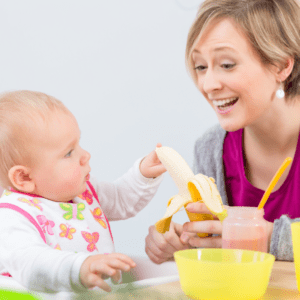
15. Banana
High-calorie food
Bananas are a go-to first food for many families — and for good reason! They’re naturally soft, easy to digest, and require zero prep, making them one of the most convenient optionsbaby led weaning on the go.
Bananas provide a lot of energy via starchy carbohydrates for your baby and can be boosted nutritionally by rolling long finger-shaped pieces in some flax seed or wheat germ, or by mixing those into a banana purée.
We recommend ground flax seed because it not only boosts iron but reduces choking risk and increases nutrient absorption compared to whole flax seeds (we can’t digest them whole). Furthermore, coating them in something like this helps your baby grip the banana more easily.
See the video below for how to serve banana based on the texture phase your baby is in (as a purée or finger food).
There you have it! Our suggestions for some great first foods for baby to start with. Serve one of these foods per day if you like and see how comfortable you and your baby are — then, move on to some more challenging textures and get creative!
Now let’s take care of some FAQs about baby’s first foods!
When can I introduce these foods to my baby?
You can introduce these foods as soon as your baby shows the developmental signs of readiness to start solids, which is somewhere around 6 months of age. Whether you’re doing purees or baby led weaning, you want to make sure your baby is able to sit upright independently, has a diminished tongue thrust reflex, and can bring a spoon/food to their mouth while seated.
Can finger foods cause my baby to choke?
It’s completely natural to worry about choking when starting solids — you’re not alone! And yes, technically, any food could pose a choking risk if it’s not prepared appropriately or if baby isn’t developmentally ready. But here’s the good news: with the right textures, shapes, and supervision, you can dramatically reduce the risk and feel confident offering a wide variety of foods safely.
Most of the foods listed in this guide are naturally soft (or can be made soft through cooking) and can be easily modified into baby-safe finger foods. That means cutting foods into appropriate shapes—typically finger-length strips or mashed textures — and avoiding high-risk items like round foods, hard foods, sticky foods or overly chewy foods (think: whole grapes or cherry tomatoes, chunks of meat, raw apples, globs of nut butter, or hot dogs/sausages served uncut).
It’s also important to know the difference between gagging and choking. Babies gag as a normal and protective reflex that helps babies learn how to handle new textures — it might look and sound scary, but it’s part of the learning process and helps them eat foods more safely. True choking is silent and requires immediate intervention.
With proper prep, close supervision, and allowing baby to eat in a safe, upright position (no distracted, reclined feeding!), you can safely support your baby’s self-feeding journey with confidence.
Do babies need to start solids with infant rice cereal?
No, babies don’t need to start on baby cereal as a first baby food.
Can it be used? Sure!
But do they have to? Absolutely not.
The reason for the common recommendation to offer infant versions of any cereals (rice, oat, mixed grain, etc.) is that they’ve been fortified with iron, which we know is an important nutrient for babies.
But there are so many other high-iron foods outside of just iron-fortified cereals that babies can have. Options that aren’t only going to provide them with the iron that they need, but also will give them that much-needed flavor and texture exposure that’s going to be so incredibly important, especially during the first few months of starting solids.
In fact, between 6 and 9 months of age babies need as much exposure to as many different textures and flavors of solid foods as we can possibly give them.
That’s because this period of time is known as the “critical window of opportunity” for developing taste and texture preferences.
In other words, the more foods that are offered to baby during this time and the least repetition in their menu…the better their outcome for picky eating prevention and oral motor skill development.
So, while infant-fortified cereal is a great option, it shouldn’t be the only option, nor does it have to be the very first food your baby gets. Focusing on providing a variety of solid foods is going to be much better for them in the long run.
Does baby food have to be bland (or can they have spices and herbs)?
No, baby’s diet does not need to be made up of bland foods, this is an old recommendation that isn’t really based on anything more than an assumption.
Babies can – and should – be offered various spices and herbs right from the beginning. This is one of the easiest ways to add more variety to their solid food and is important for increasing their exposure to various flavors.
Read more about adding spices to baby’s first food, here.
Can my baby try more than one food at a time?
Yes!
There is absolutely no need for babies to have to wait 3 to 5 days between the introduction of new solid foods. This is an old recommendation that is based on no research and was initially told to parents as a way to be able to track any allergic reactions to different foods.
However, now we know with much more certainty that the risk of developing food allergies or reactions to foods that are not on the highly allergenic food list is low. And the risks of picky eating associated waiting long periods of time between introducing new solid foods (and preventing baby from experiencing a variety of solid foods in the first year of life) are higher than the very, very minimal risk of developing a food allergy to – let’s say – chicken.
To learn more about why this “rule” is outdated and what you should do instead, click here.
Is there a specific order for introducing baby's first solid foods?
No, there is no specific order that’s required for introducing solid foods to your baby. Many blogs online incorrectly claim that vegetables should be offered before fruit, that meat or grains shouldn’t be offered until a couple of months into starting solids, or that mixed meals need to be introduced after single-ingredient foods.
The truth is, babies have already been tasting a multitude of flavors from breast milk, and if they are being started on solid foods around 6 months of age (and when all developmental signs of readiness to start solids have emerged), your baby’s digestive system is ready and able to handle all types of proteins, fat, fiber, and yes – even gluten.
Concerned about your baby’s ability to digest grains specifically? Read this for the lowdown on how and why babies can digest grains and starches at 6 months of age.
Is it okay to use jarred baby food?
At My Little Eater™, we encourage a flexible, real-life approach to feeding. That means, sometimes, it’s okay to use convenience options like jarred baby food when needed — as long as you’re still prioritizing nutrient density and whole foods as much as possible, and giving your baby opportunities to be exposed to lots of real food textures.
If you are using pre-made baby food, it’s really important to look at the ingredients. Choose prepared baby foods with no added sugars, salts or preservatives, and go for options that contain simple, whole food ingredients, ideally that introduce more savoury than sweet flavors (this doesn’t mean just through added sugar, but through primarily sweet foods in general like fruit forward blends). Read more in our baby food buying guide.
Is it possible my baby could have an allergic reaction to these foods?
Yes, it is possible—but that doesn’t mean you should hold off on offering these foods. In fact, current guidelines from leading health organizations recommend introducing common allergens early and often as a way to help prevent food allergies, not avoid them. That includes foods like nut butter, eggs, whole milk yogurt, fish, soy, tree nuts, and wheat — many of which are nutrient-dense (and listed above as some of the best food options!).
There’s no specific order that determines which allergenic food should be introduced before another. However, you do want to introduce the highly allergenic foods in isolation from other highly allergenic foods. In our 60 day Baby Meal Plan, we do this strategically by introducing allergens that commonly show up in recipes first to rule them out right away.
To learn more about introducing highly allergenic foods, what they are, and the recommended protocol for how to do it, click here.
Note: If your baby has severe eczema, a known food allergy, or a strong family history of allergies, it’s a good idea to talk to your pediatrician or allergist before introducing higher-risk foods.
Can I serve my baby from our family meals?
Yes — and actually, that’s one of the best things you can do! Serving your baby modified versions of your family’s meals not only makes feeding easier (no need to prep a separate “baby menu” every day 🙌), but it also encourages babies to become adventurous eaters, right from the start. Being part of family meals helps babies learn by watching you eat, and sharing the same foods promotes positive feeding dynamics and reduces picky eating down the road.
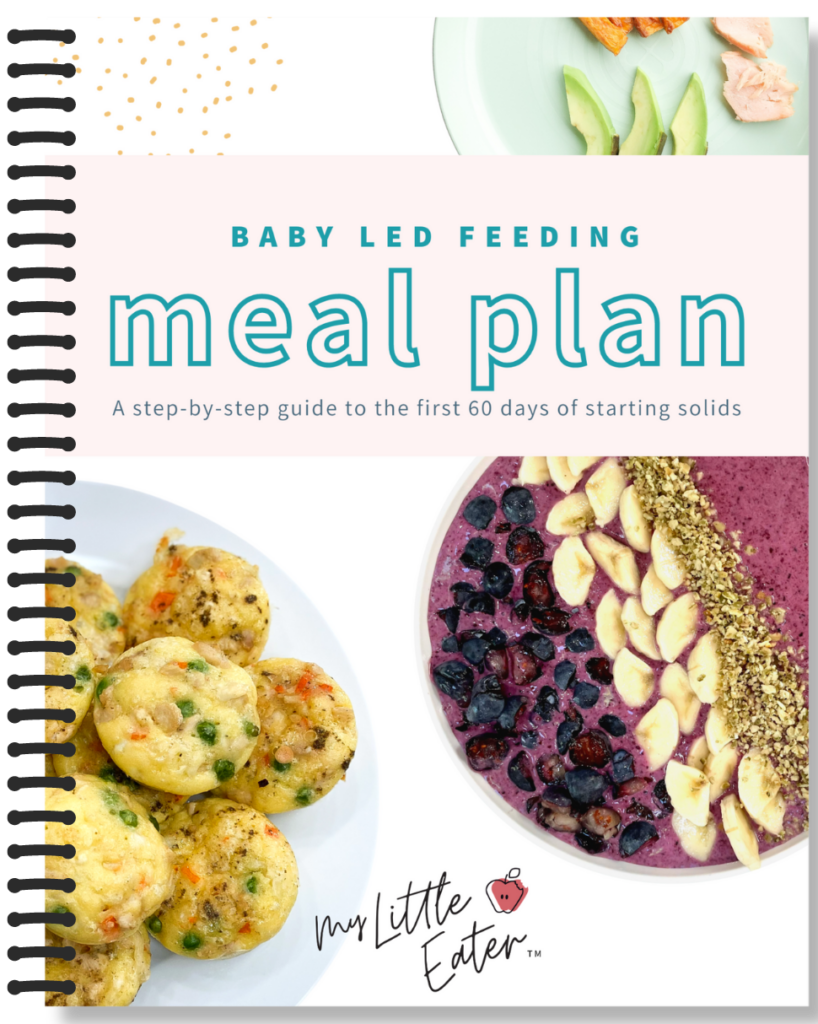
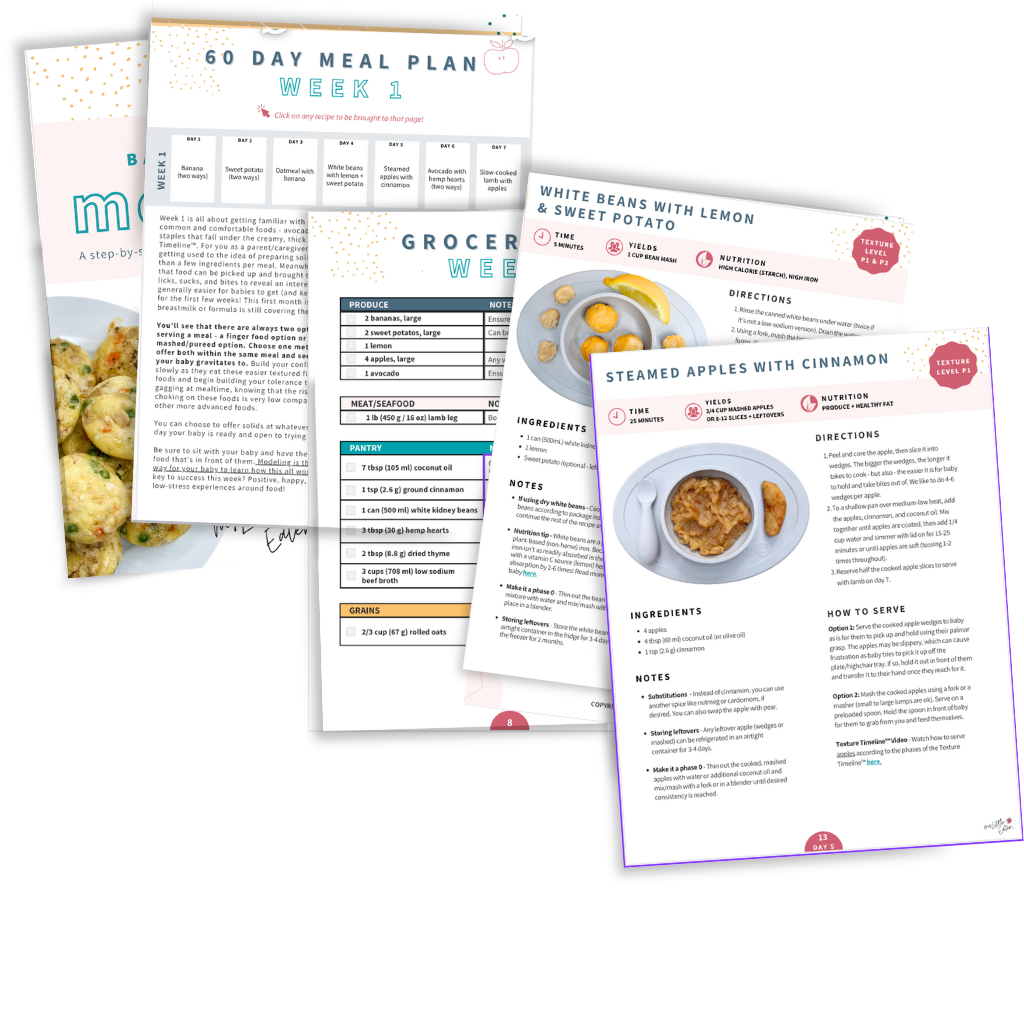
The key? Making simple modifications to ensure the texture, shape, and salt content are appropriate for your baby. And if you’re unsure where to start or how to confidently make your meals baby-friendly, our 60 Day Baby Led Feeding Meal Plan takes out all the guesswork. It’s packed with family-style meals that are easy to adapt for babies, includes exactly how to cut and serve each food safely, and offers ideas for introducing a wide variety of nutrients — without spending hours in the kitchen.
You’ll get:
Over 80 recipes and a full roadmap for feeding your baby (and your whole family!) with confidence.
Day-by-day texture progression (spoon feeding and finger food options for the first few weeks)
Strategic introduction of allergenic foods
Weekly grocery lists, nutrition, and feeding tips
Instructions on how to serve food to your baby
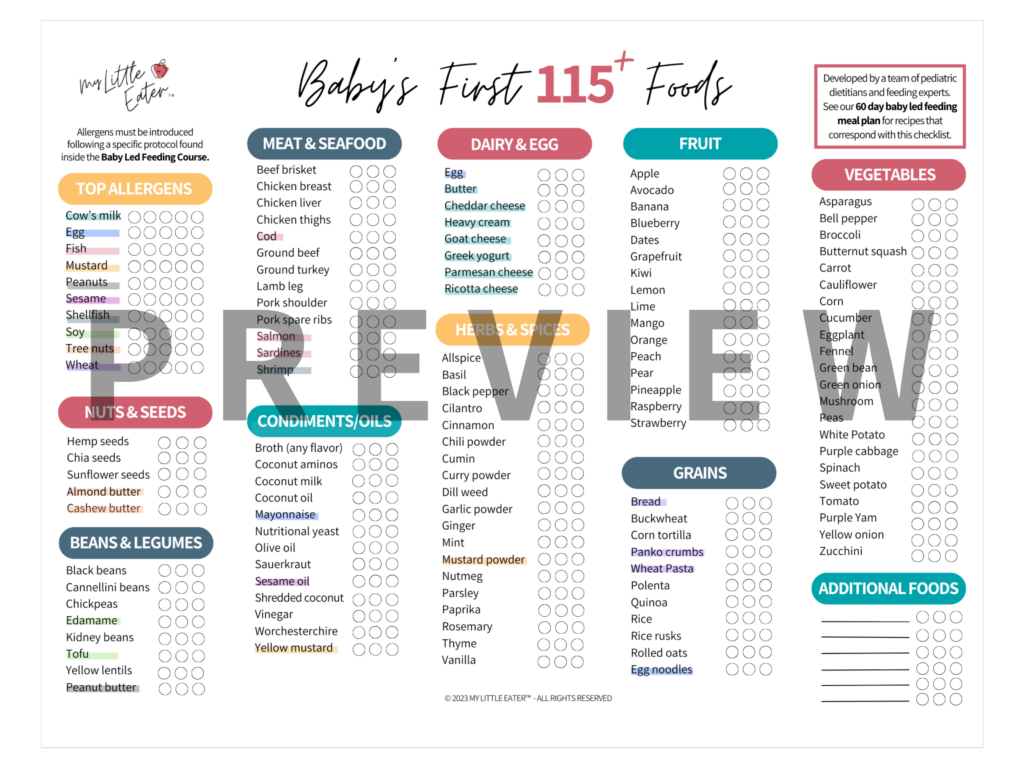
Over 100 new foods introduced in the first 60 days
Love it? Pin it to save for later!
Edwena Kennedy, RD
Founder and lead Registered Pediatric Dietitian at My Little Eater Inc., creator of The Texture Timeline™, and mom of two picky-turned-adventurous eaters.
Edwena Kennedy, RD
Founder and lead Registered Pediatric Dietitian at My Little Eater Inc., creator of The Texture Timeline™, and mom of two picky-turned-adventurous eaters.
One Comment
The reviewer highlighted parts most people usually miss.