- Edwena Kennedy, RD, BSc. Neuroscience
- Published: July 27, 2026
What if the secret to raising an adventurous eater isn’t about finding the perfect recipe, but about following a developmental roadmap that takes the guesswork out of every bite?
We know that the transition to solids can feel overwhelming. You might worry about choking risks, feel confused by conflicting allergen advice, or simply feel too exhausted to decide what is for breakfast. Our dietitian-led 60 day baby meal plan is designed to replace that anxiety with clarity and confidence. It provides a clear, step-by-step path to introduce over 115 new foods in just 60 days, ensuring your baby meets critical nutritional milestones while developing a love for variety. By following a structured plan, you can move past the fear of the unknown and focus on the joy of watching your little one discover new textures and flavors!
This guide explains how to implement a 60-day strategy that aligns with the 2024 AAP guidelines and the latest 2026 allergen introduction protocols. We will show you how to build a confident eater and set the foundation for a lifetime of healthy habits without the mental load of daily meal planning.
Key Takeaways
Learn why the “Flavor Window” between 6 and 9 months is a critical opportunity to help your baby enjoy bitter and savory tastes before picky eating habits can set in.
Discover how the Texture Timeline™ bridges the gap between purees and finger foods, allowing you to support your baby’s developmental progress without the pressure of choosing one specific feeding method.
Master a stress-free approach to introducing the top 10 allergens and prioritize iron-rich foods to meet your baby’s unique nutritional needs.
Simplify your daily routine with a structured 60 day baby meal plan that provides a clear roadmap for introducing over 115 new foods while eliminating the exhaustion of meal planning.
Build confidence in the high chair by understanding the vital difference between gagging and choking and adopting the “Division of Responsibility” for calmer family mealtimes.
Table of Contents
The First 60 Days: Why This Window Defines Your Baby’s Relationship with Solid Foods
The first 12 weeks of starting solids represents a unique biological opportunity known as the “Flavor Window.”
Between six and nine months of age, babies are naturally more open to accepting new, complex flavors like the bitterness of a lemon or the earthiness of lentils, for example.
By committing to a structured 60-day approach, you are aligning with the brain’s peak window for habit formation. A structured 60 day baby meal plan acts as a safeguard against falling into the trap of only offering sweet fruits or falling into a “beige food” rut, ensuring that variety is the default rather than an afterthought!
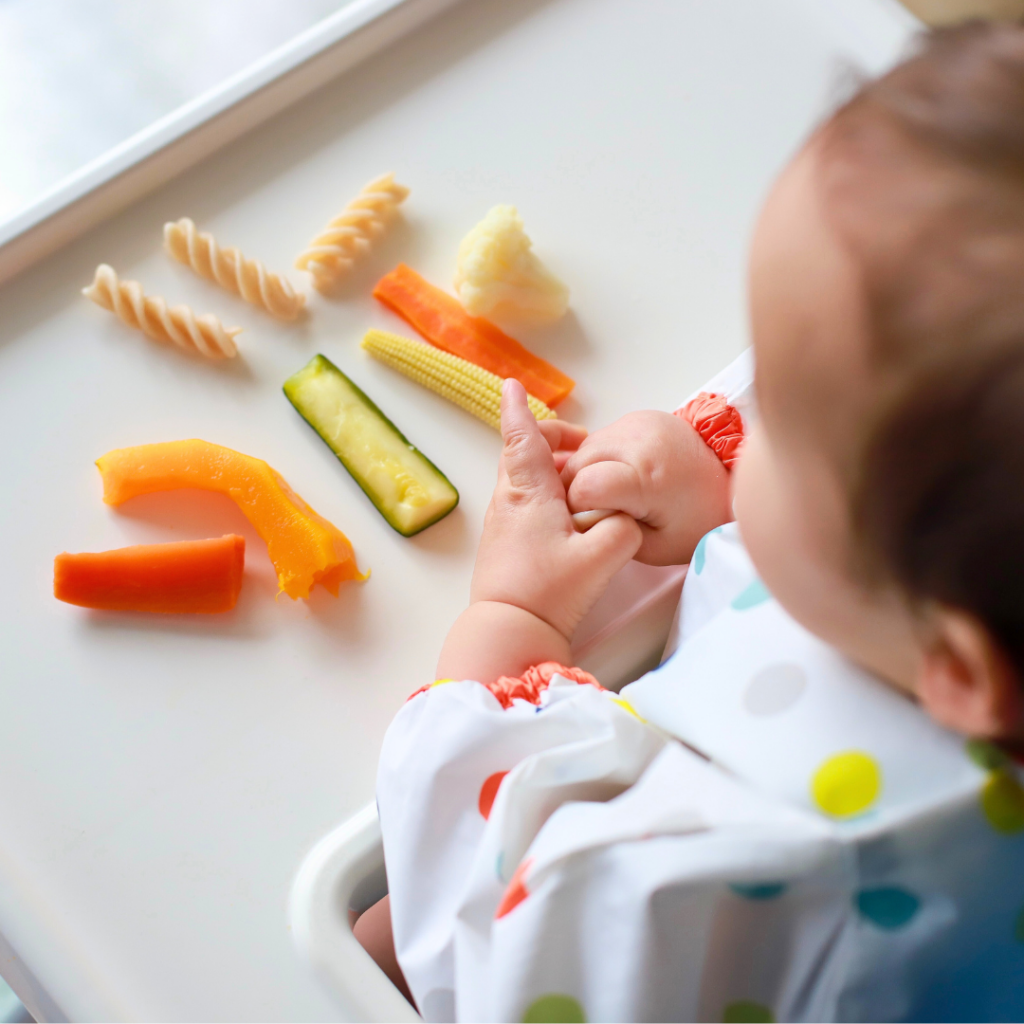
Consistency in the first 60 days also plays a huge role in how your baby perceives the high chair. When a baby knows what to expect, their cortisol levels remain low, creating a relaxed feeding environment that is ideal for learning.
This predictability is just as important for you. Having a plan eliminates the “what do I feed them today?” panic that often leads to repetitive, low-variety meals.
The Science of Palate Training
Palate training is the intentional introduction of diverse flavors to shape future preferences. While babies are biologically wired to prefer sweet tastes from birth, their brains are incredibly moldable (1). Research shows it can take up to 15 exposures for a baby to truly accept a new flavor (2).
Our 60 day baby meal plan builds this repetition into the schedule so your baby isn’t just trying broccoli once and giving up. We lean into this repetition to help them overcome the natural drive for sweet foods and embrace savory, nutrient-dense foods instead. This deliberate exposure helps rewire their expectations of what “good” food tastes like.
Setting Realistic Milestones for the First 60 Days
It helps to view the first 60 days as part of an early solid-feeding age range with two distinct phases.
During the first 30 days, your baby is essentially a food explorer. They are learning how to pick up food, how to bring it to their mouth, how to take bites, how to move their tongue, how to swallow, how different textures feel in their hands and mouth, and more. Success in month one isn’t measured by the amount of food consumed; it’s measured by curiosity.
Tip: Many babies at 6 to 7 months do best with 1 to 2 solid meals a day.
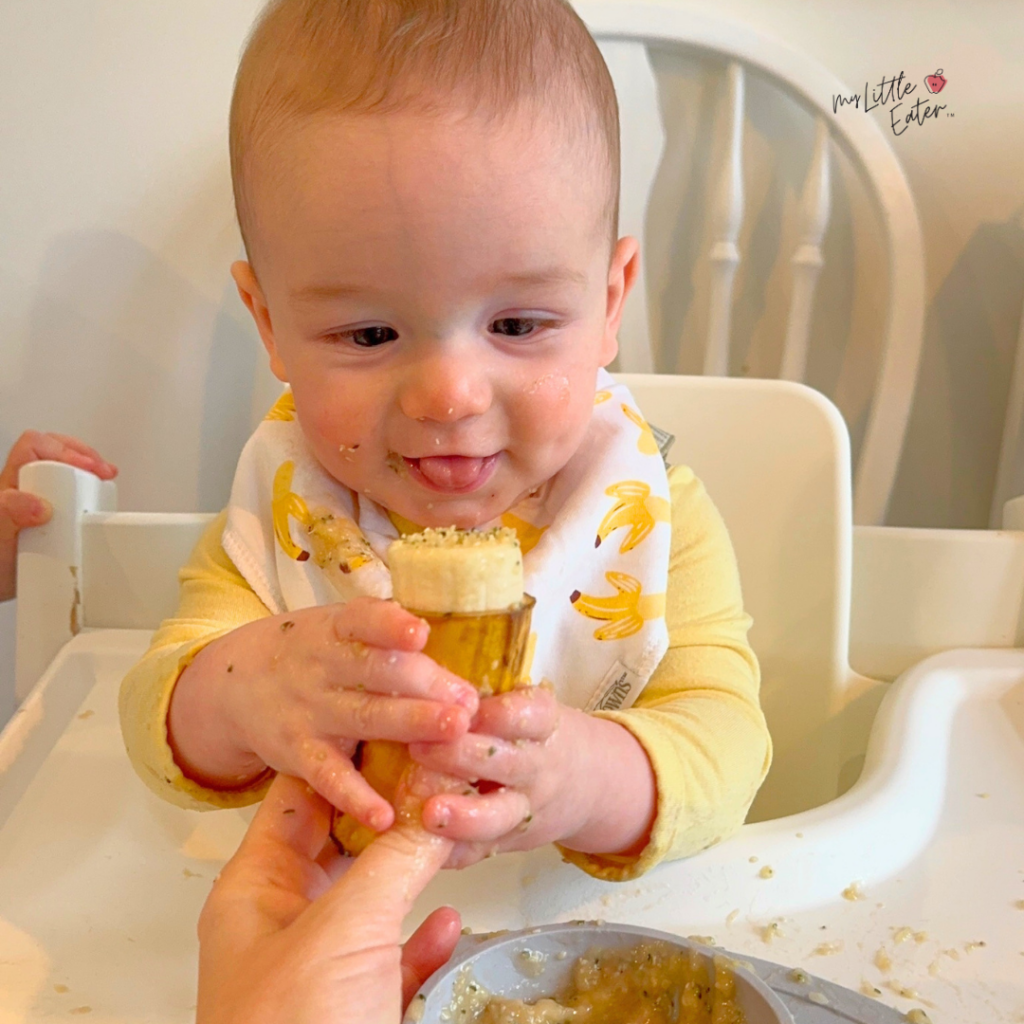
In the second 30 days, the focus begins to shift more towards actual eating. Because you have a structured rotation, hitting the milestone of 100 different foods becomes entirely manageable.
But even in the second 30 days, don’t worry if more food ends up on the floor than in their stomach. Their tummies are only about the size of their fist, so even a few small bites of various foods provide the developmental foundation they need. It’s normal to start with half a spoonful, or less, in those early days. And when introducing foods, you don’t have to offer one single-ingredient new food every 3 to 5 days. This is a myth!
Decoding the Texture Timeline™: From First Purées to Finger Foods
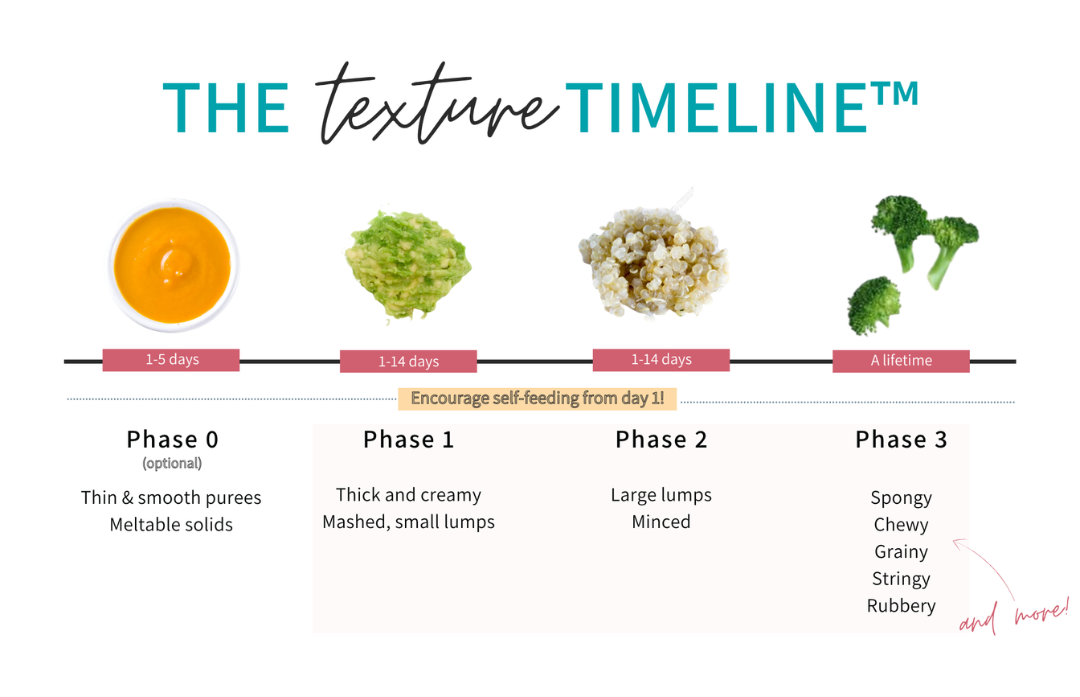
Many parents feel forced into choosing one method over the other. They either choose traditional purées or dive headfirst into Baby-Led Weaning. This “all or nothing” debate is a myth that adds unnecessary pressure to an already busy and stressful time. The reality is that your baby’s oral motor development isn’t a switch; it’s a spectrum.
Babies should also be developmentally ready before they start solids, with signs like good head control and the ability to sit upright with minimal assistance. Our signature Texture Timeline™ offers a middle ground, allowing you to move through phases that build your baby’s confidence and skills safely. This approach, which is the backbone of our 60 day baby meal plan, aligns with CDC infant nutrition guidelines, which emphasize introducing a variety of textures by age one. By focusing on progression rather than rules, you can help your baby develop the coordination needed to manage food without the fear of skipping vital developmental steps.
You can learn more about each phase of the Texture Timeline™ here.
Nutritional Priorities
As you move beyond the initial exploration of textures, the focus naturally shifts to what is actually inside the food. From birth to six months, your baby relied on iron stores built up during pregnancy, but these begin to deplete right around the time they start solids and begin trying age-appropriate baby food.
This makes iron one of the most critical nutrients for your little one.
While milk still provides the bulk of their calories early on, the 60 day baby meal plan ensures that every bite of solid food is nutrient-dense. Balancing breastfeeding or infant formula with solids is a gradual process. You don’t need to reduce milk feeds immediately; instead, think of solids as a nutritional top-up that grows more significant as your baby’s skills improve and as they age!
You can learn more about feeding schedules for babies 6-12 months here.
Iron-Rich Foundations for Brain Development
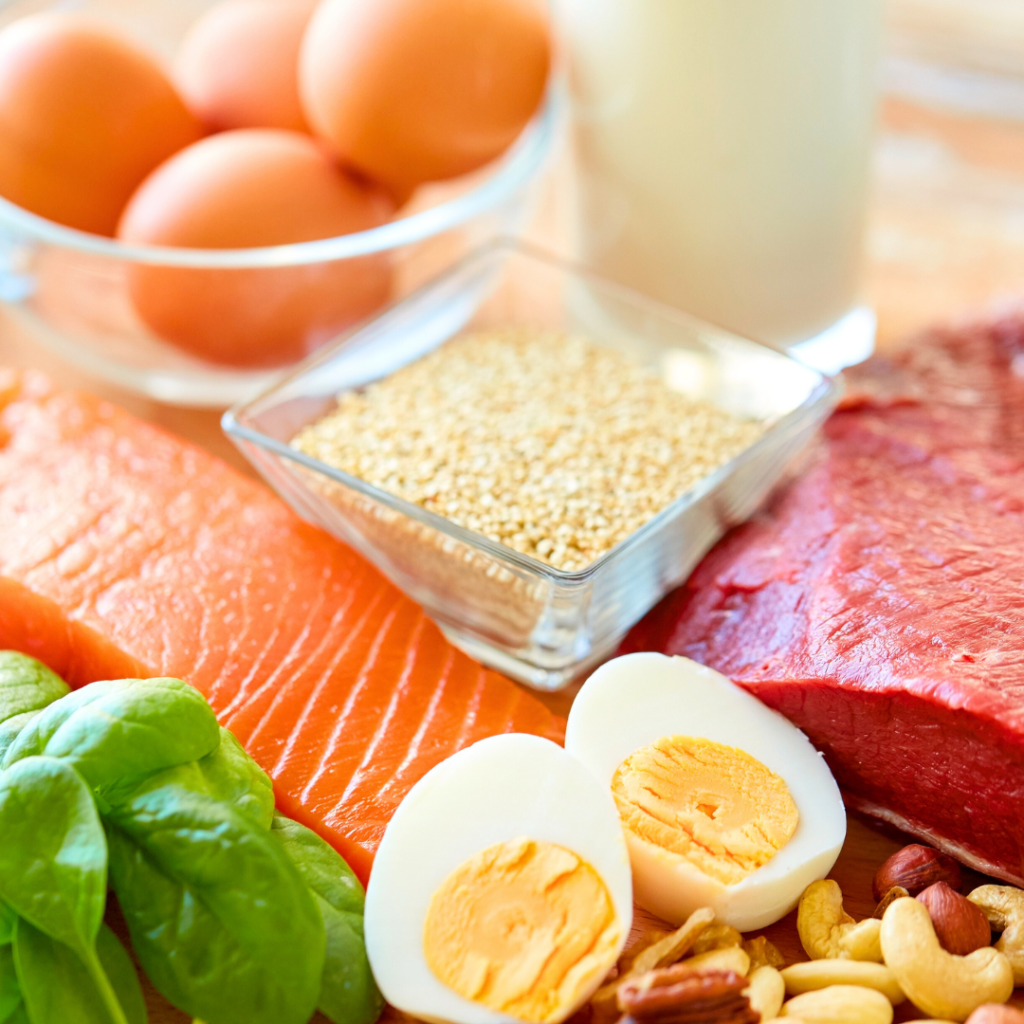
Iron is essential for healthy brain development and oxygen transport in the body (3). To meet these needs, prioritize offering foods like meat and fish. Since plant-based sources of iron (like beans, lentils, and tofu) are harder for the body to absorb, pairing these foods with Vitamin C is a simple, effective strategy to increase absorption. For example, serving lentils with tomato sauce or adding a squeeze of lemon to white beans can significantly boost absorption.
You can also find more specific ideas in our guide on Iron Rich Foods for Babies.
Allergen Introduction: Early and Often
The latest 2026 guidelines from the USDA and ASCIA emphasize that introducing common allergens early, around six months, can help prevent food allergies from developing (4, 5).
Our 60 day baby meal plan uses a systematic approach to introduce all of the top 10 allergens, which include peanut, egg, dairy, soy, wheat, tree nuts, fish, shellfish, mustard, and sesame. The meal plan will provide you with exact details on how to prepare the allergenic food safely and how to introduce it to your baby following the proper allergen protocols.
It is helpful to know the difference between a true allergic reaction, like hives or vomiting, and a simple skin flush. Many babies experience a temporary red contact rash from acidic foods like tomatoes or citrus. This is a normal skin sensitivity rather than an allergy.
You can learn more about the symptoms of an allergic reaction here.
Overcoming Mealtime Anxiety: Gags, Refusals, and High-Chair Fears
The high chair often becomes a place of high stakes. It is completely natural to feel your heart rate climb when your baby makes a skeptical face or starts throwing all of their food on the floor.
To lower the temperature at the table, we embrace the “Division of Responsibility.” As the parent, you are the leader of the “what,” “where,” and “when.” You choose the menu, the timing, and the location. Your baby is the leader of the “if” and “how much.” They decide whether to take a bite and when their tummy is full. Giving up the need to control their intake is the first step toward a peaceful mealtime environment. Our 60 day baby meal plan supports this by providing a reliable “what” and “when,” allowing you to focus on being a calm, supportive mentor for your baby!
And once solids are established, you can offer drinks with meals as part of the routine. If you’re feeling ready, you can offer small sips of water from an open cup on your baby’s very first day of starting solids!
Water is the best choice at that stage, but keep it to less than 2 ounces at each meal so it does not replace milk feeds; you can also talk about the food and meal to encourage interest and help your baby connect eating with the family routine.
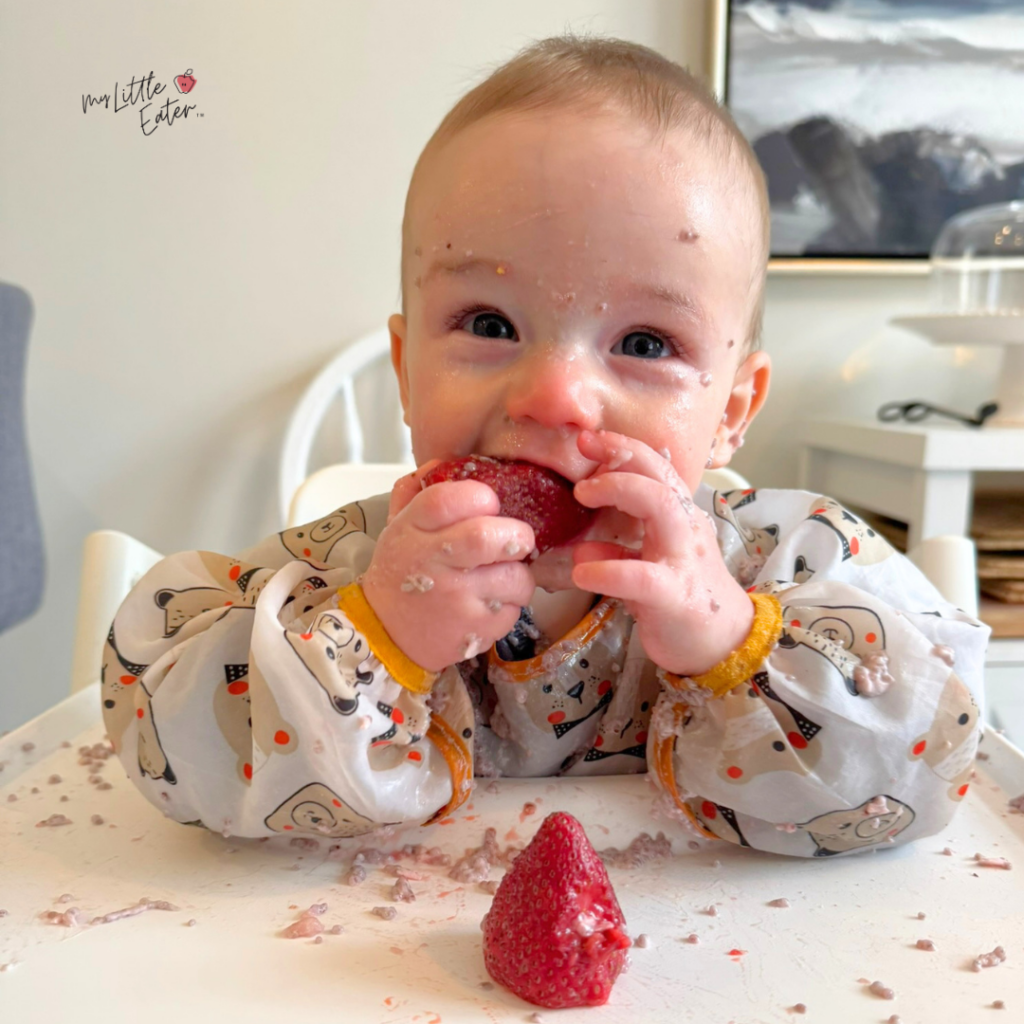
The Anatomy of a Gag: Why It is Actually a Good Thing
Gagging is a built-in reflex and safety mechanism, not a sign of danger.
In infants, the gag reflex is triggered much further forward on the tongue than it is in adults. This biological design ensures that they cough up and spit out food long before it gets anywhere near their airway. It is their body’s way of practicing how to navigate new textures. Some specific foods should still be avoided because they are choking hazards. For example, whole grapes, nuts and seeds, and hot dogs require modifications to be safe for baby, while other foods like popcorn should be avoided altogether until after age 4.
If you see your baby gagging, which usually involves making noise, coughing, or pushing food forward with their tongue, the best response is a “wait and see” approach. Staying calm is essential because your baby looks to you for cues. If you gasp or rush to pull them out of the chair, they learn that gagging is a scary event! If you remain neutral and encouraging, they learn they have the skills to handle the challenge. You should seek professional help only if you notice signs of true feeding aversions, such as consistent vomiting, extreme distress at the sight of the high chair, or physical issues with swallowing.
If your baby is struggling with any feeding challenges mentioned above, we can help you! Learn more about our 1:1 virtual counselling services here.
Strategies for Food Refusal
When your baby makes a face or refuses a specific food, it isn’t a permanent rejection. It is often just a reaction to a new sensory experience.
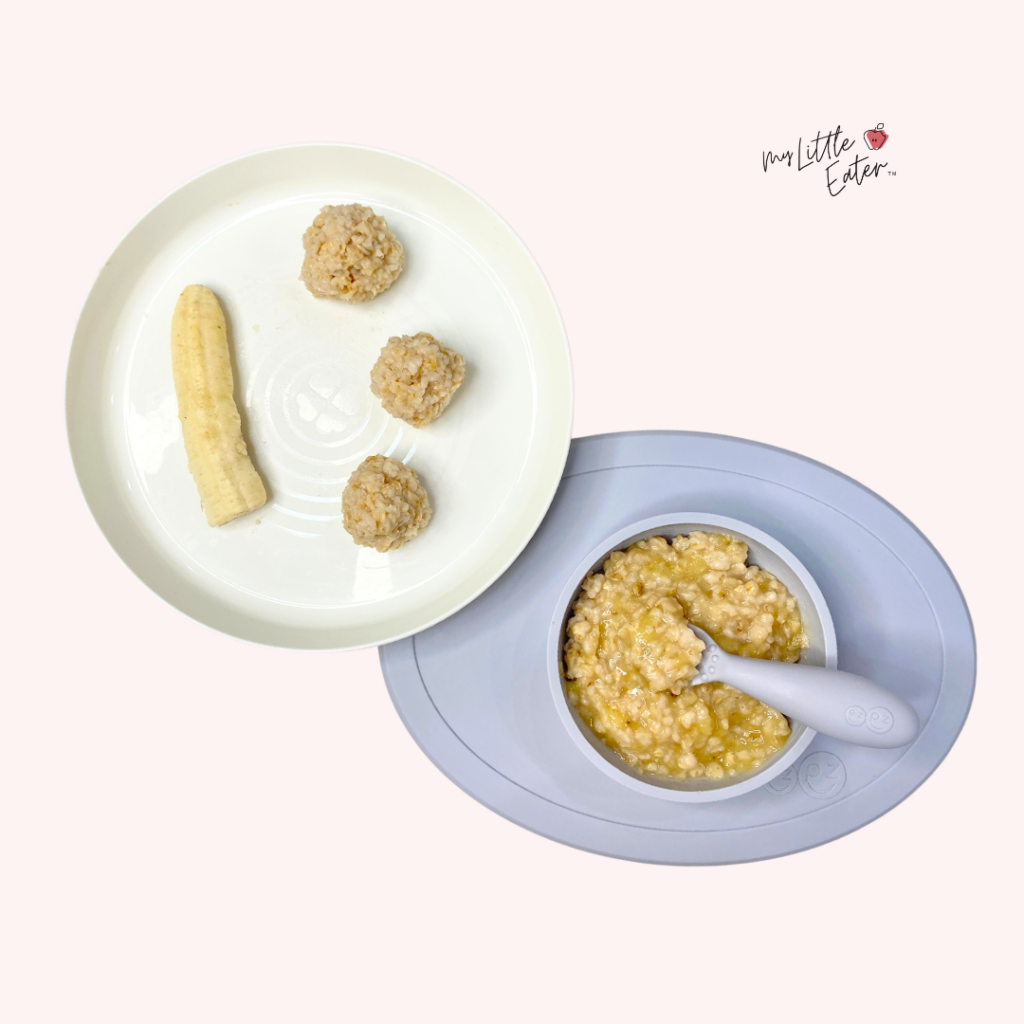
The “no-pressure” approach is vital here. Forcing a bite or using distractions to sneak food in can backfire, leading to a picky eater cycle later on. Instead, try using “bridge foods” to help your baby eat food by pairing familiar flavors with a different texture.
For example, if your baby already loves mashed banana, try serving a small amount of oatmeal with it next time. The familiarity of the banana makes the new texture of the oatmeal feel safer. If you are ready to stop the mealtime guessing game and start enjoying the process, our 60 Day Baby Meal Plan gives you the exact steps to follow.
Finally, consider the environment. A sensory-friendly feeding space reduces the mental load for your baby. Turn off the television and put away digital devices. If the room is too loud or chaotic, your baby’s brain has to work much harder to process the new sensations of taste and texture.
A calm, predictable space helps them focus on their internal cues of hunger and satisfaction, which is the foundation of a healthy relationship with food. These feeding tips also help support healthy eating habits over time.
Inside the My Little Eater 60 Day Baby Meal Plan
Decision fatigue is one of the biggest hurdles parents face when starting solids, often leading to a repetitive cycle of “safe” foods.
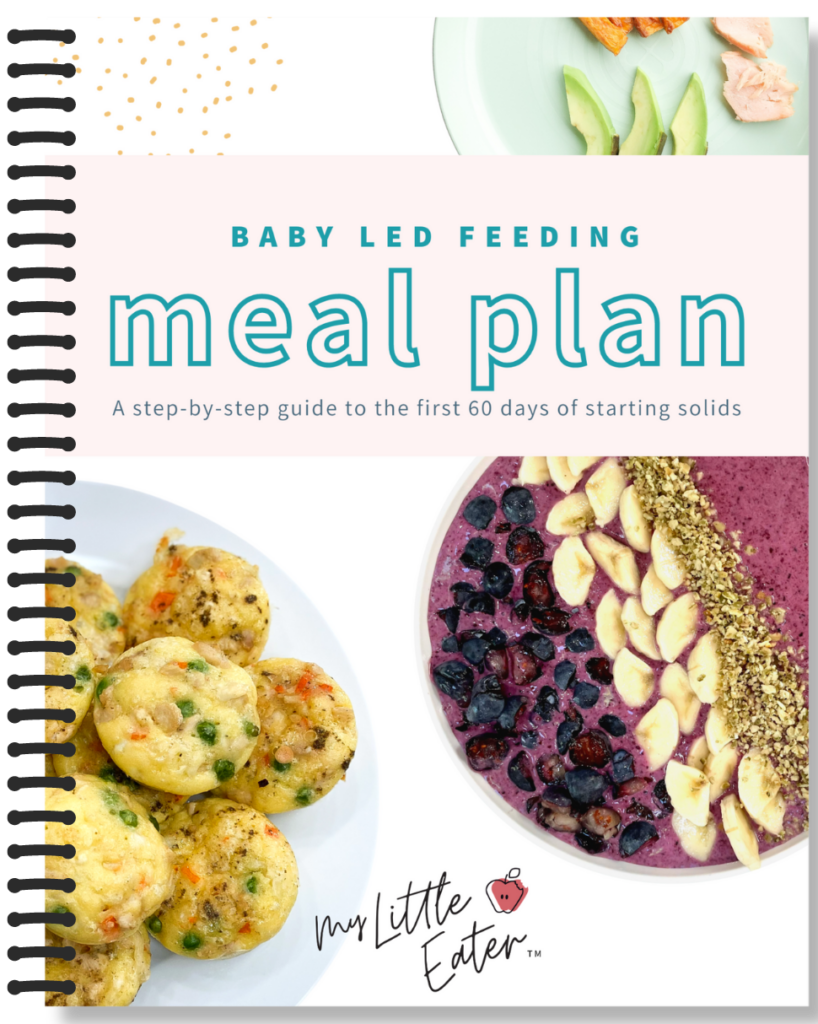
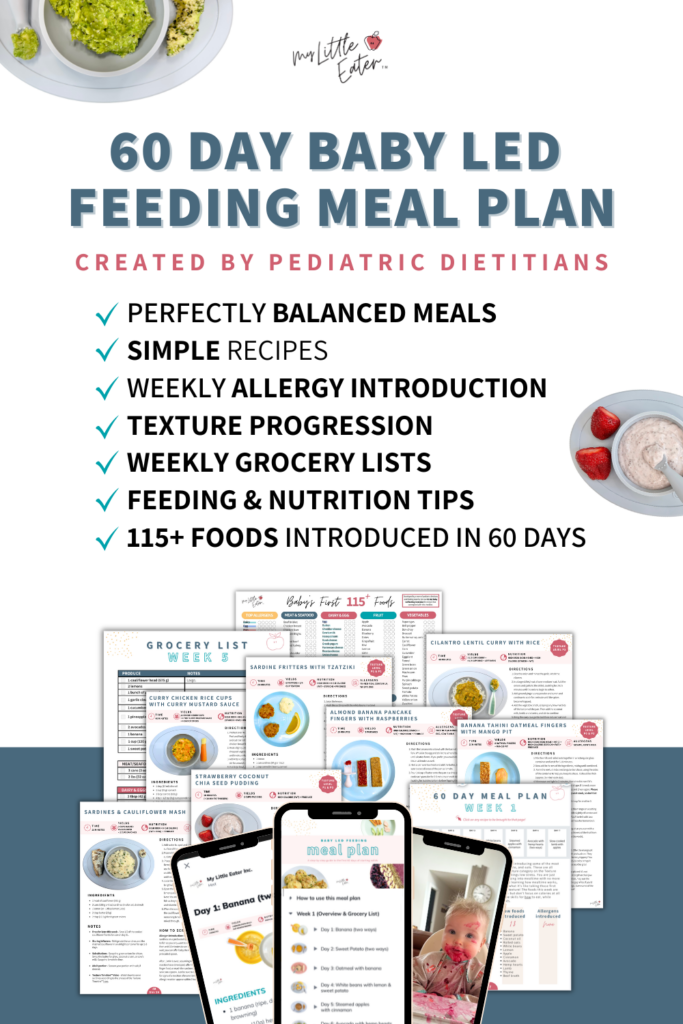
Our 60 day baby meal plan is designed to eliminate this stress entirely. By providing a clear, dietitian-led roadmap, we take the guesswork out of nutrition, allergen introduction, and texture progression. You don’t have to wonder if you are doing enough; you simply follow the plan and watch your baby’s skills grow.
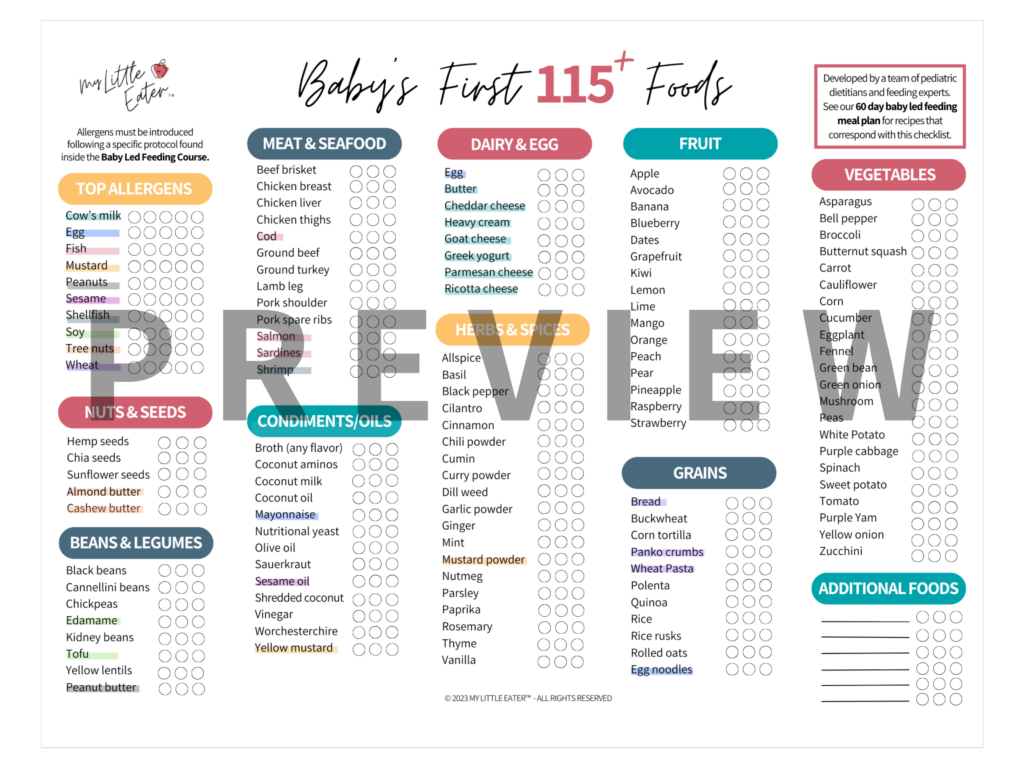
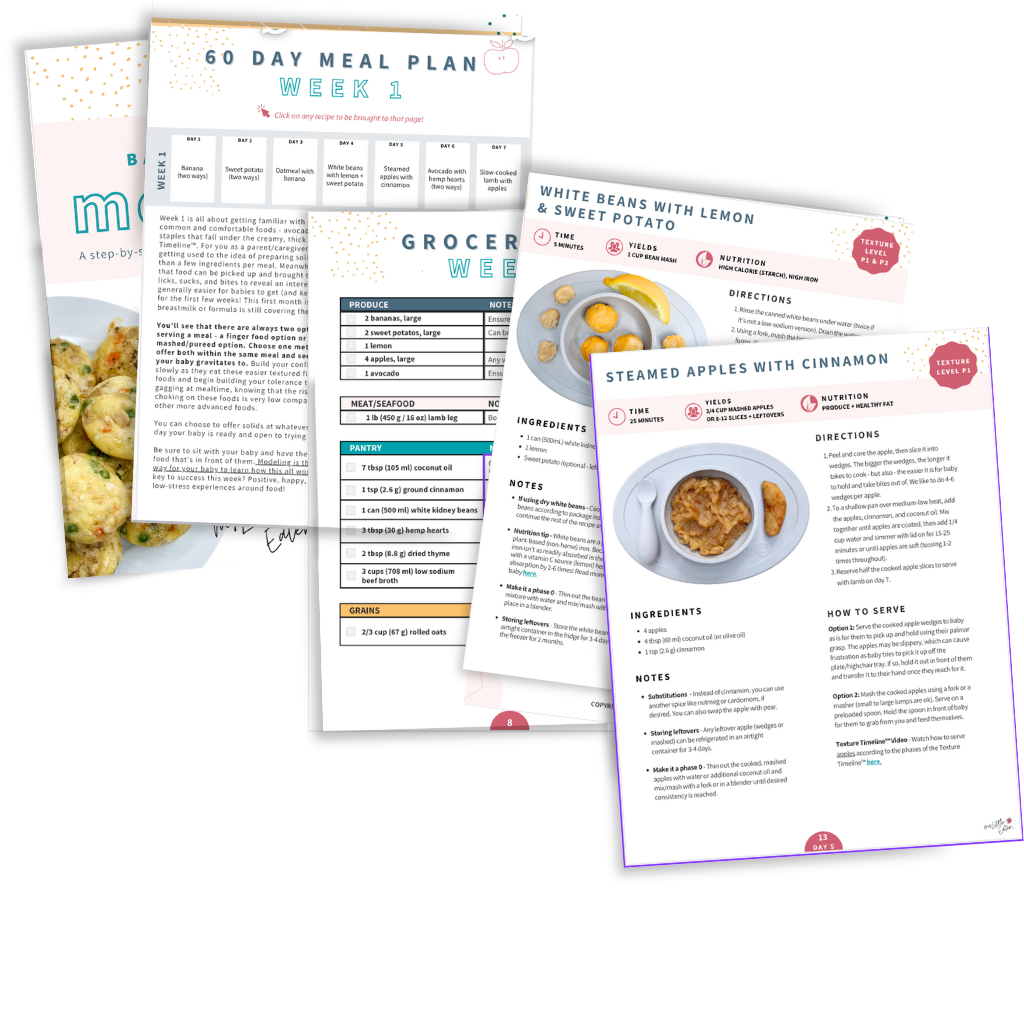
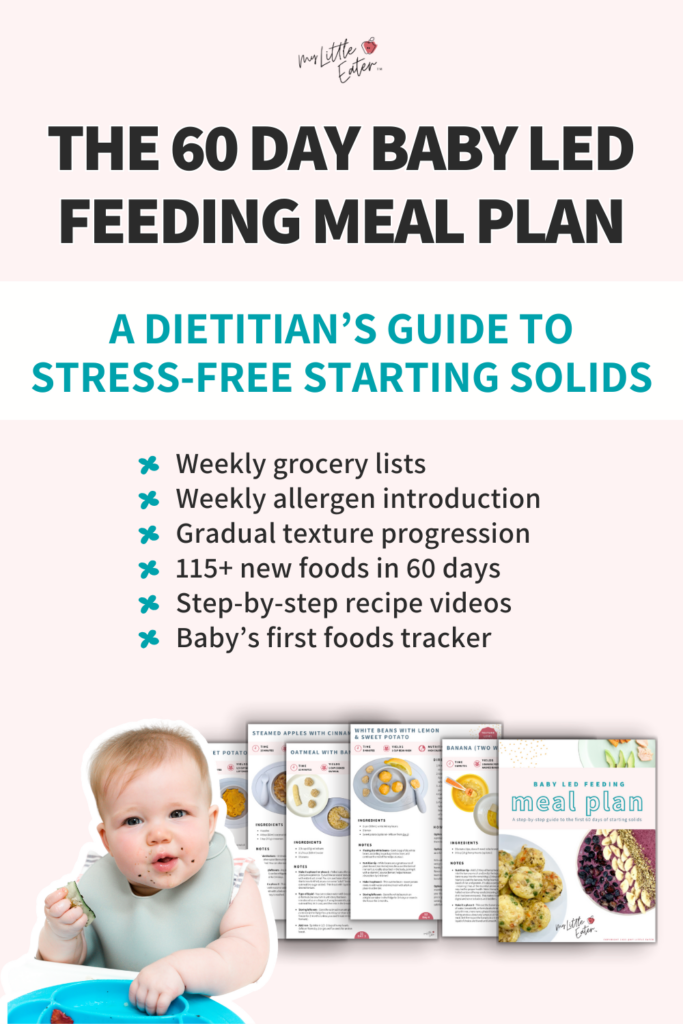
This digital resource is a comprehensive toolkit that includes organized weekly grocery lists, a checklist of over 115 foods, videos of how to prepare and serve each meal, and dietitian-guided “watch & learn” videos for the first 30 days. It prioritizes fresh foods and avoids added sugars, excessive salt, and honey before 12 months.
Having a menu designed by a pediatric dietitian in your pocket means you can trust that every meal is nutritionally balanced. We’ve heard from countless parents who moved from being “terrified” to “thriving” in just eight weeks. They report a profound shift in their own confidence, which in turn creates a more relaxed and joyful eating environment for their little ones!
When you have a plan, you can stop worrying about the logistics and start focusing on the memories you’re making during these first bites.
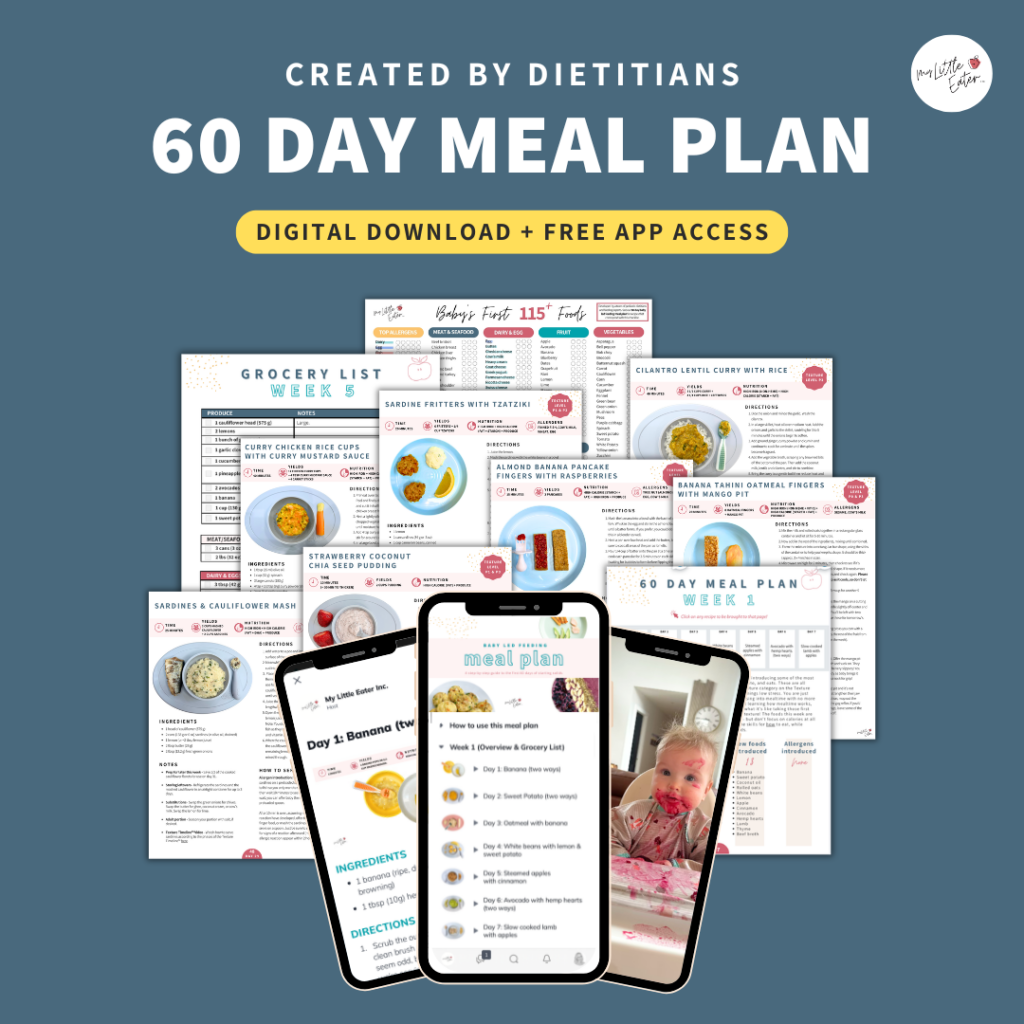
The 100 Foods Challenge
Variety is one of the most effective tools we have to prevent future picky eating. Hitting the benchmark of over 100 different foods in just 60 days helps expand their palate during that critical “Flavor Window” we discussed earlier, with exposure spanning other foods beyond just sweet favorites.
From mild coconut curries to roasted root vegetables seasoned with aromatic herbs, the plan introduces flavors that reflect a real-world diet. This intentional diversity ensures your baby is exposed to the bitter, savory, and complex tastes that build a lifelong love for nutritious food and supports a more adventurous palate across food groups.
A Complete Support System and Feeding Tips
You aren’t just downloading a document; you’re gaining access to a support system led by pediatric dietitians. We believe that every parent deserves professional guidance delivered with empathy and a human touch.
For those who want to dive deeper into the “why” behind the “how,” this plan pairs perfectly with our Baby Led Feeding™ Course. This combination provides a total education, covering everything from safety basics to advanced feeding strategies. If you’re ready to find your confidence and raise an adventurous eater, Get the full Baby Led Feeding Program today!
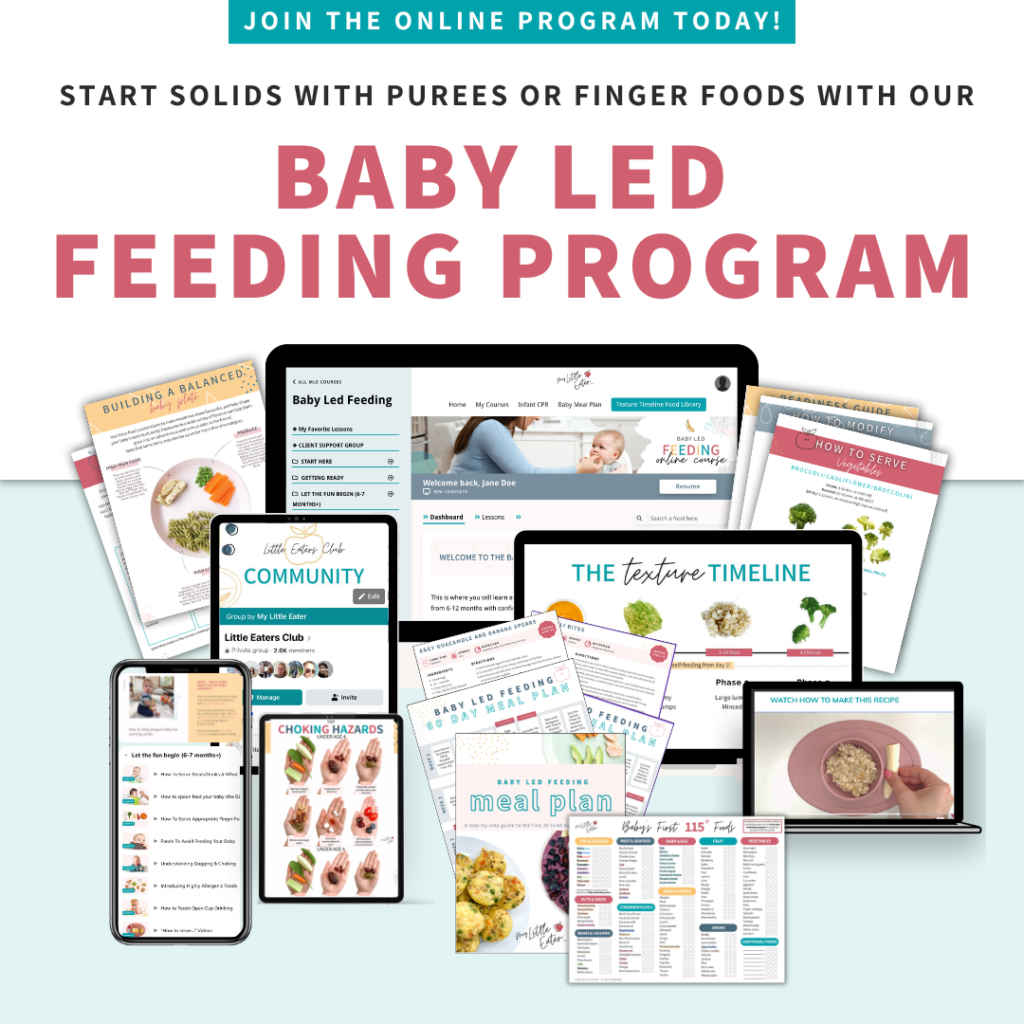
Our programs are designed by Pediatric Dietitian Edwena Kennedy, her team of dietitians, and a pediatric speech-language pathologist to provide this exact structure. Over 10,000 parents have already used the My Little Eater method to navigate this milestone with confidence. You don’t have to do this alone or spend your evenings stressed over grocery lists and meal prep.
Frequently Asked Questions
Is a 60-day meal plan suitable for babies starting at 4 months or 6 months?
The 60 day baby meal plan is primarily designed for babies starting solids around the 6-month mark, which is when most infants are developmentally ready for solid foods. Before then, milk remains the main source of nutrition and solids do not replace it. Infants 0 to 6 months generally need 24 to 32 ounces of milk daily. For families exclusively breastfeeding, breastfeeding on demand is recommended, and feeds may happen 8 to 12 times daily. While some parents begin earlier based on medical advice, the structured variety in this plan aligns best with the nutritional needs and motor skills of a 6-month-old.
Do I need to follow the 60-day baby meal plan exactly for it to work?
Although consistency when starting solids is important, you don’t need to follow the plan perfectly; life happens! The plan is a flexible roadmap rather than a rigid set of rules; if you miss a day or want to swap a meal based on what’s in your fridge, that is completely okay. The goal is consistent exposure to diverse flavors and textures rather than perfect adherence.
What if my baby has a suspected allergy during the 60-day plan?
If you suspect an allergic reaction, stop offering that specific food immediately and consult your pediatrician or an allergist. Because the 60 day baby meal plan uses a systematic approach to introduction, you’ll be able to quickly identify which food caused the issue. Safety is always the priority, so you should only resume the plan with non-allergenic foods until you receive professional medical guidance on how to proceed.
Can I use this meal plan if I am doing traditional spoon-feeding instead of BLW?
Yes, this plan is designed to support both traditional spoon-feeding and baby-led weaning. We utilize the Texture Timeline™ to help you move from smooth purées to lumpy mashes and finger foods at a pace that feels safe for you. You can choose the preparation method that matches your comfort level while still benefiting from the dietitian-led nutritional strategy and variety of ingredients.
How much time does meal prep take for the 60-day baby meal plan?
Meal prep is designed to be manageable for busy parents by using simple recipes and strategic grocery lists. Most daily prep takes less than 15 minutes, but some days take a bit more time as we build in family-style meals so that you’re not having to cook twice! We know you’re exhausted, so the plan focuses on efficiency, ensuring you spend less time in the kitchen and more time enjoying the milestone of your baby’s first bites.
What happens after the 60 days are over?
Once the 60 days are complete, your baby will have a foundation of over 100 different foods and the skills to eat modified family meals. This is the perfect time to transition into a more intuitive feeding routine while maintaining the variety you’ve built. Many parents find our Little Eater’s Recipe Library helpful for ongoing meal inspiration with built-in baby and toddler modifications. As your baby approaches 10 months of age, moving into our Feeding Toddlers™ Program is a natural next step to help navigate the upcoming “picky” toddler years with confidence!
Is the 60-day baby meal plan safe for babies with reflux?
This plan is safe for babies with reflux, as it focuses on whole, nutrient-dense foods that can sometimes be easier on the stomach than processed alternatives. However, every baby is different, so it’s important to monitor how your little one reacts to specific acidic or spicy ingredients. During bottle feeding, if your baby eats expressed milk or formula for reflux, do not add cereal to the baby’s bottle unless a clinician specifically advises it, as cereal in the bottle can raise choking risk. We always recommend discussing the introduction of solids with your pediatrician to ensure the timing and textures are appropriate for your baby’s specific reflux triggers.
Does the plan include vegetarian or vegan options?
The plan is highly adaptable and includes many naturally plant-based recipes that work for vegetarian or vegan families. While we include iron-rich animal proteins like beef, poultry, lamb, and pork, you can always swap these foods for plant-based iron sources like lentils, beans, or tofu. You can easily tailor the 60-day journey to match your family’s dietary preferences and values without sacrificing essential nutrition.
Pin This Info To Save For Later!
References
Ventura, A. K., & Mennella, J. A. (2011). Innate and learned preferences for sweet taste during childhood. Current Opinion in Clinical Nutrition and Metabolic Care, 14(4), 379–384.
Williams, K. E., Paul, C., Pizzo, B., & Riegel, K. (2008). Practice does make perfect: A longitudinal look at repeated taste exposure. Appetite, 51(3), 739–742. https://doi.org/10.1016/j.appet.2008.06.010
McCann S, Perapoch Amadó M, Moore SE. The Role of Iron in Brain Development: A Systematic Review. Nutrients. 2020 Jul 5;12(7):2001. doi: 10.3390/nu12072001. PMID: 32635675; PMCID: PMC7400887
Vale, S. L., Hourihane, J., & ASCIA Guideline Expert Writing Group. (2026). ASCIA guideline: Infant feeding for food allergy prevention. Clinical & Experimental Allergy, 56(4), 319–329. https://doi.org/10.1111/cea.70217
U.S. Department of Agriculture & U.S. Department of Health and Human Services. (2025). Dietary guidelines for Americans, 2025-2030. https://www.dietaryguidelines.gov

Edwena Kennedy, RD, BSc. Neuroscience
Founder & Lead Pediatric Registered Dietitian at My Little Eater
Edwena is a Registered Dietitian with over 15 years of experience in pediatric nutrition, two post-secondary degrees (Neuroscience and Applied Human Nutrition), and a mama of two boys. She's the creator of the Texture Timeline™ and is backed by a team of pediatric dietitians and a speech-language pathologist. Meet the full team here.
Edwena Kennedy, RD, BSc. Neuroscience
Founder & Lead Pediatric Registered Dietitian at My Little Eater
Edwena is a Registered Dietitian with over 15 years of experience in pediatric nutrition, two post-secondary degrees (Neuroscience and Applied Human Nutrition), and a mama of two boys. She's the creator of the Texture Timeline™ and is backed by a team of pediatric dietitians and a speech-language pathologist. Meet the full team here.
More Blogs Like This...